

Baju Kebaya Tradisional
The Story
Baju Kebaya Tradisional
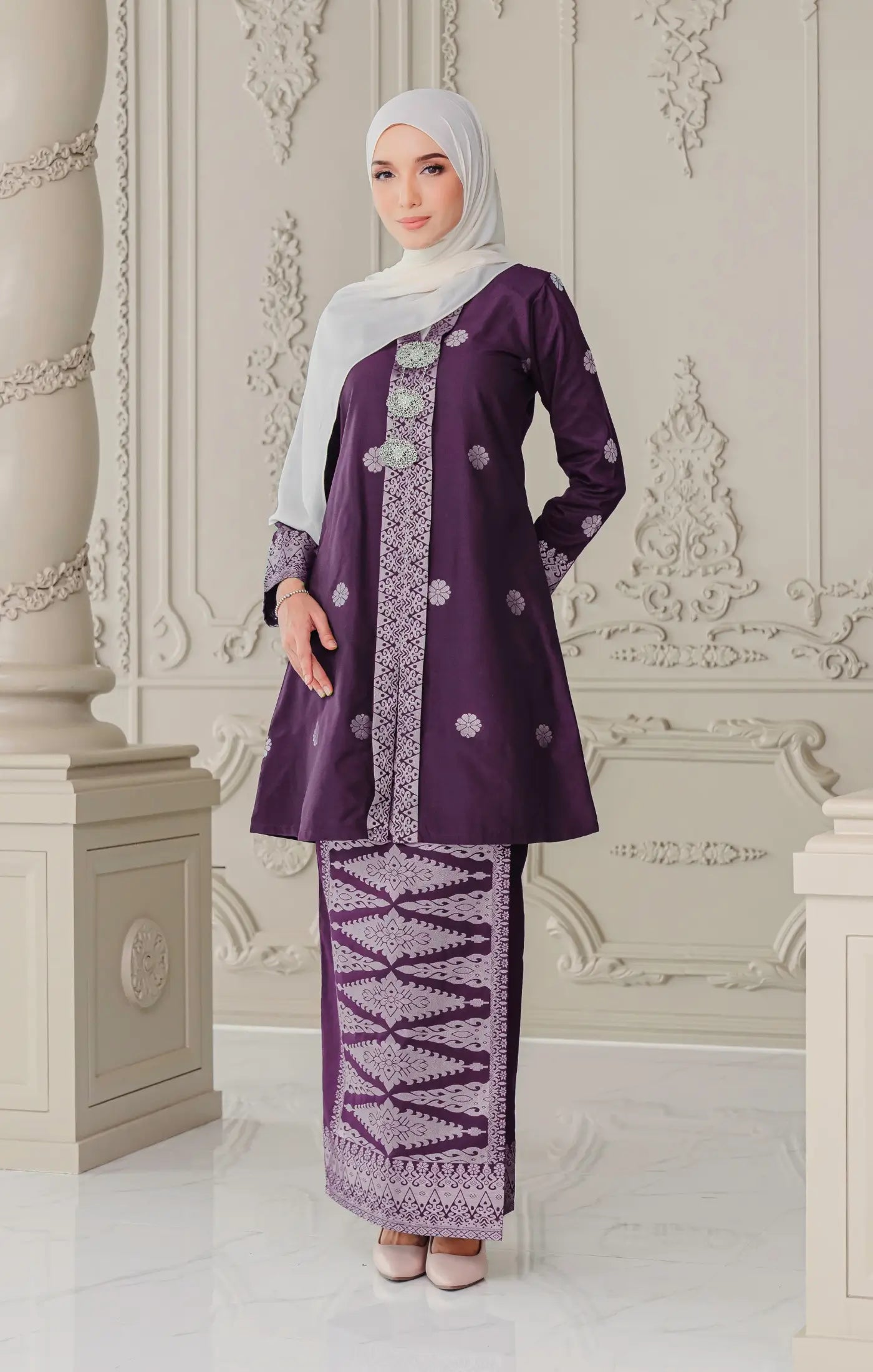
Ask a textile curator what makes a kebaya a kebaya, and the answer is surprisingly precise. At the Muzium Tekstil Negara, the rule is three marks: an opening down the front, a pesak panel at the front, and a set of kerongsang ibu and anak to close it. Everything else, from the fabric to the length, has changed over the centuries. This collection is our way of keeping the baju kebaya tradisional close to those roots while making it easy to wear today.
The Three Marks of a Traditional Kebaya
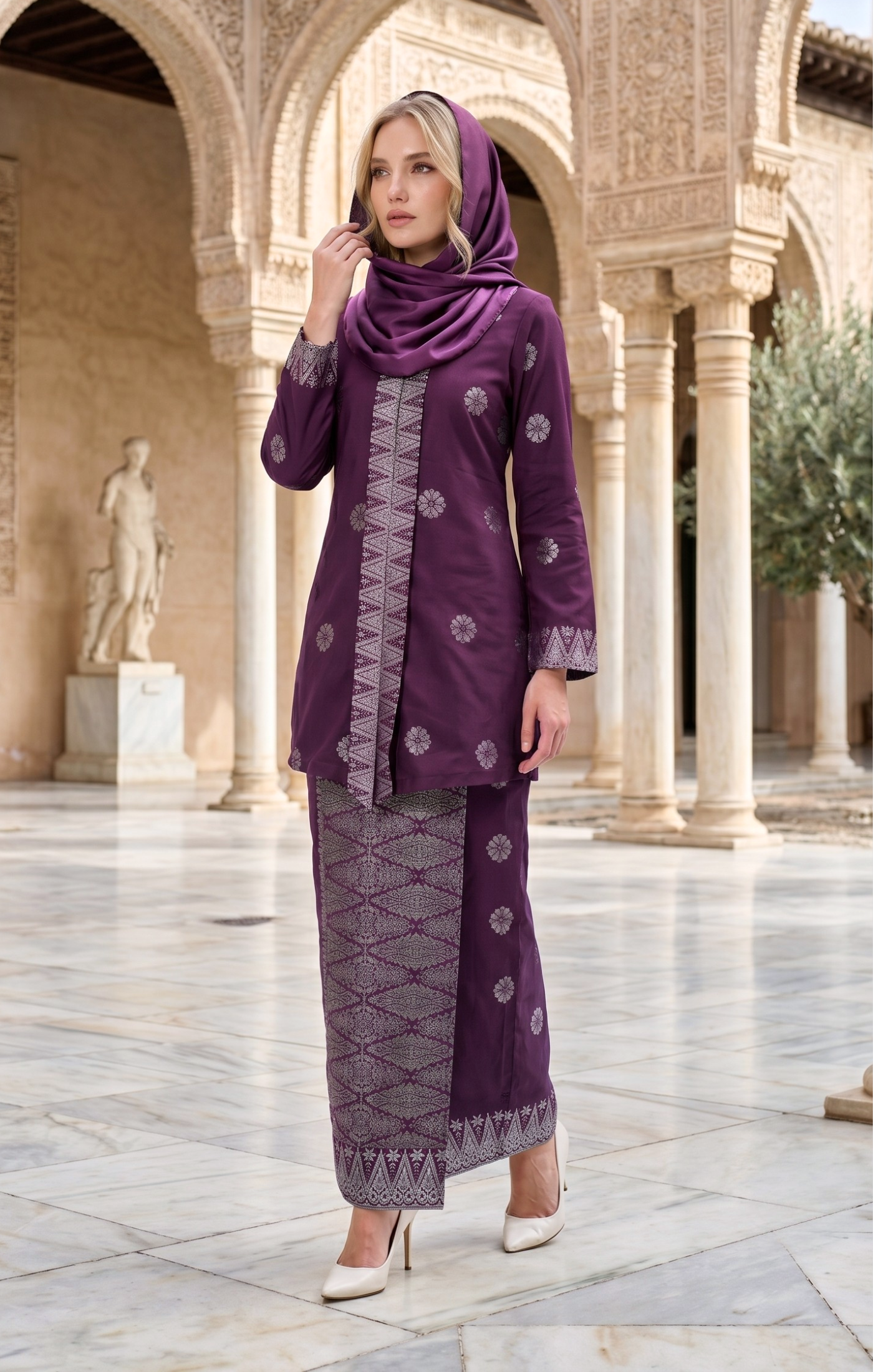
The front opening. A true kebaya opens down the centre front instead of being pulled on over the head like a kurung.
The pesak. A shaped panel at the front gives the kebaya its graceful line over the chest and hips.
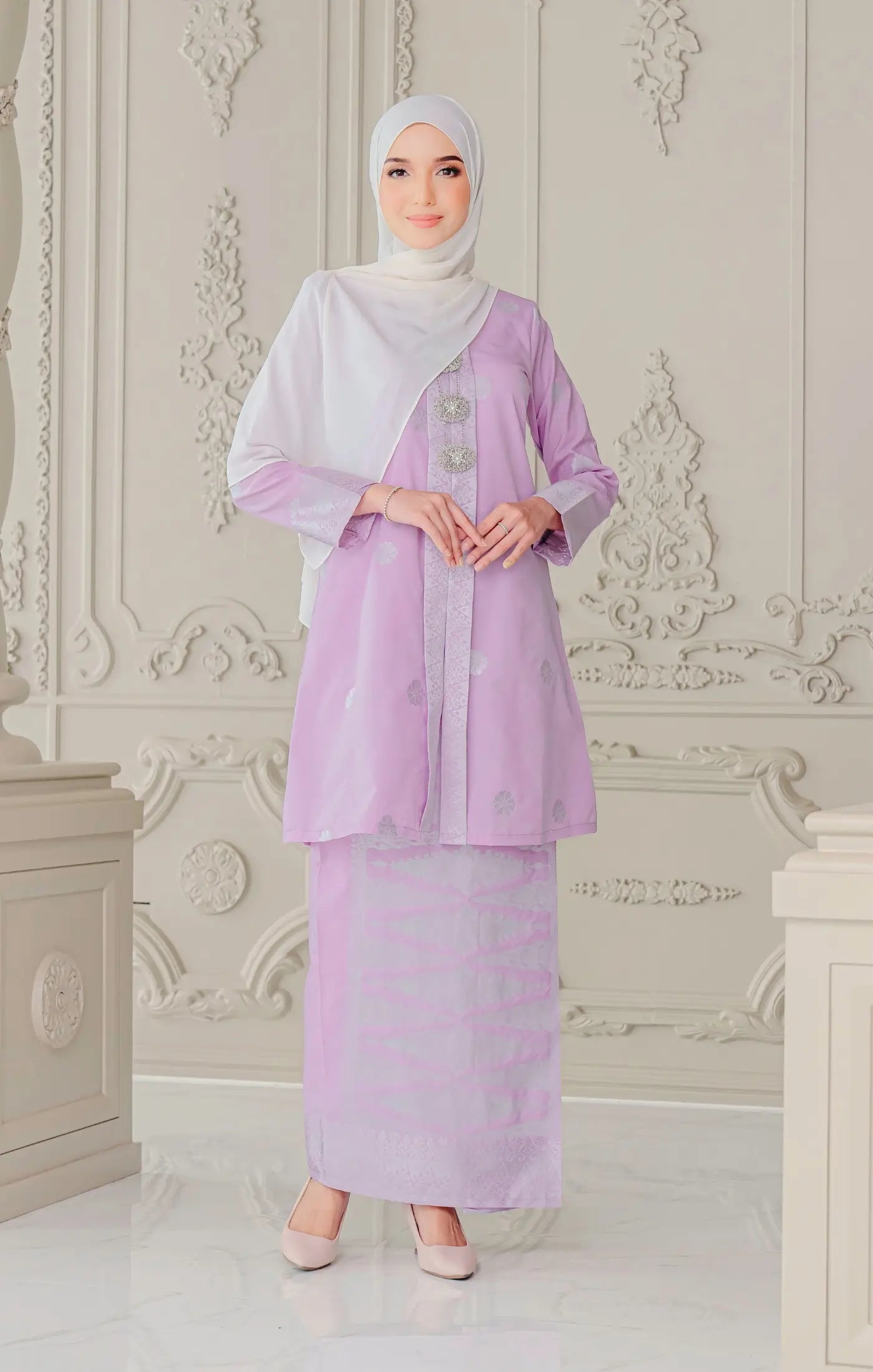
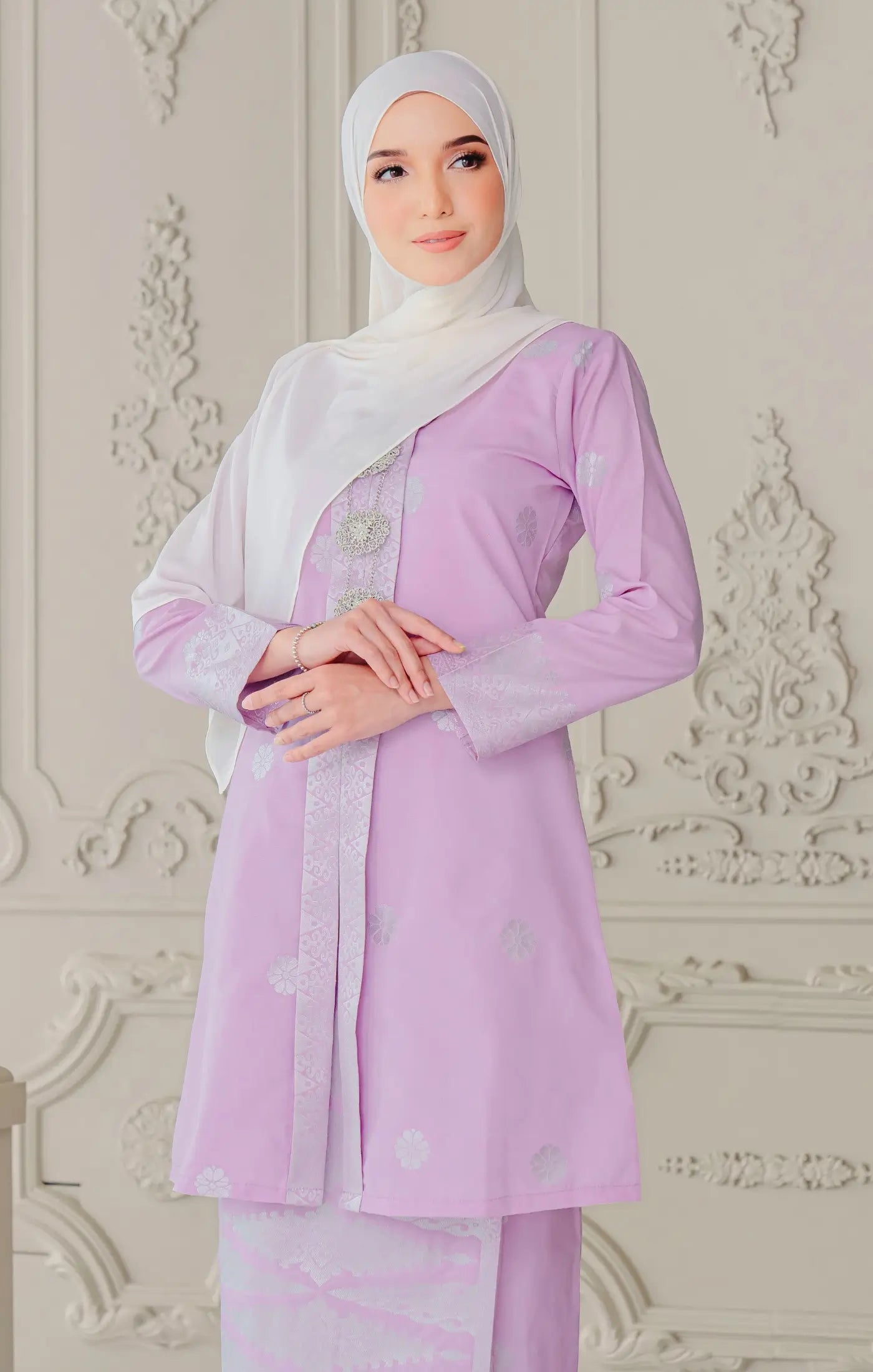
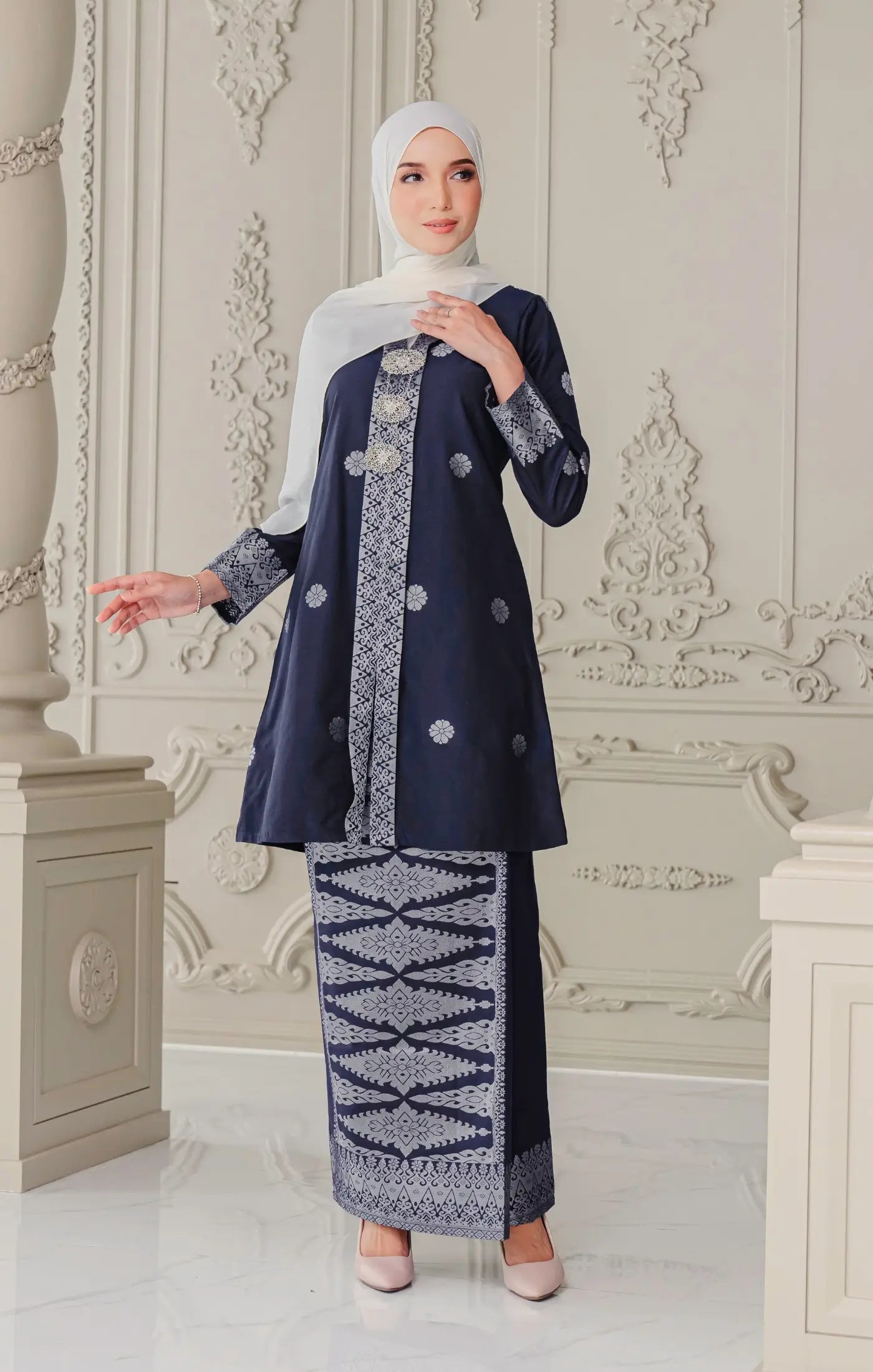
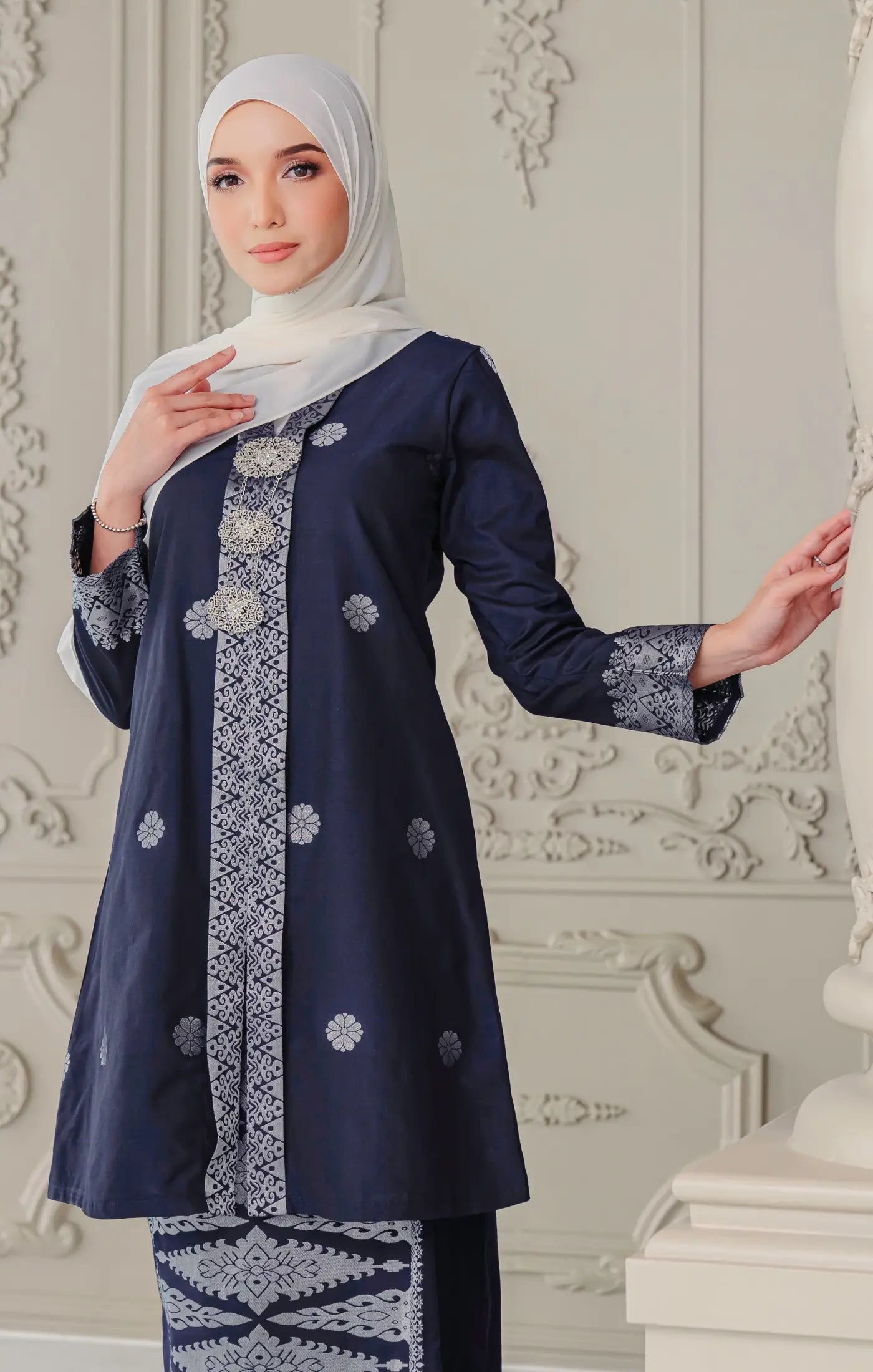
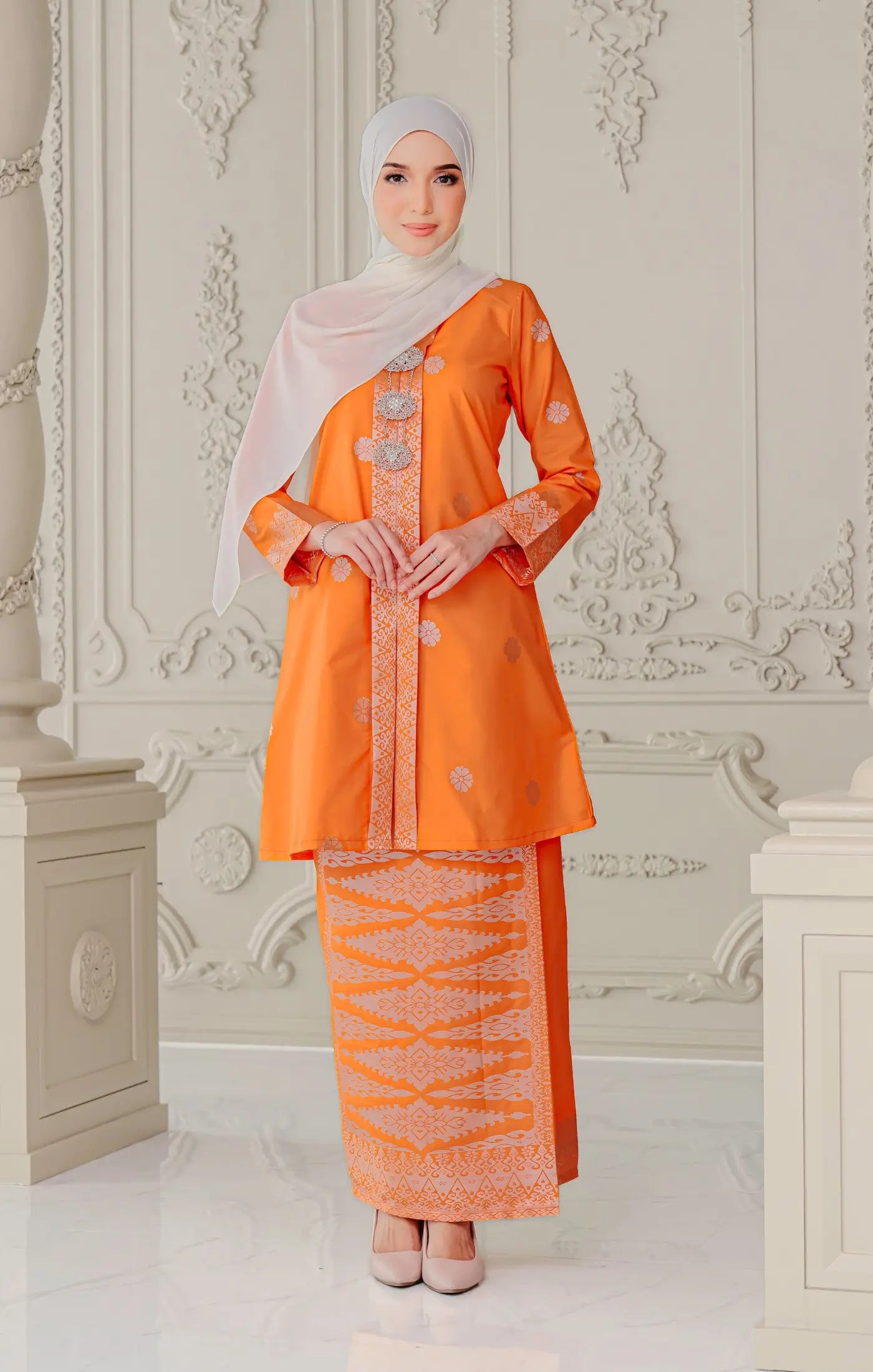
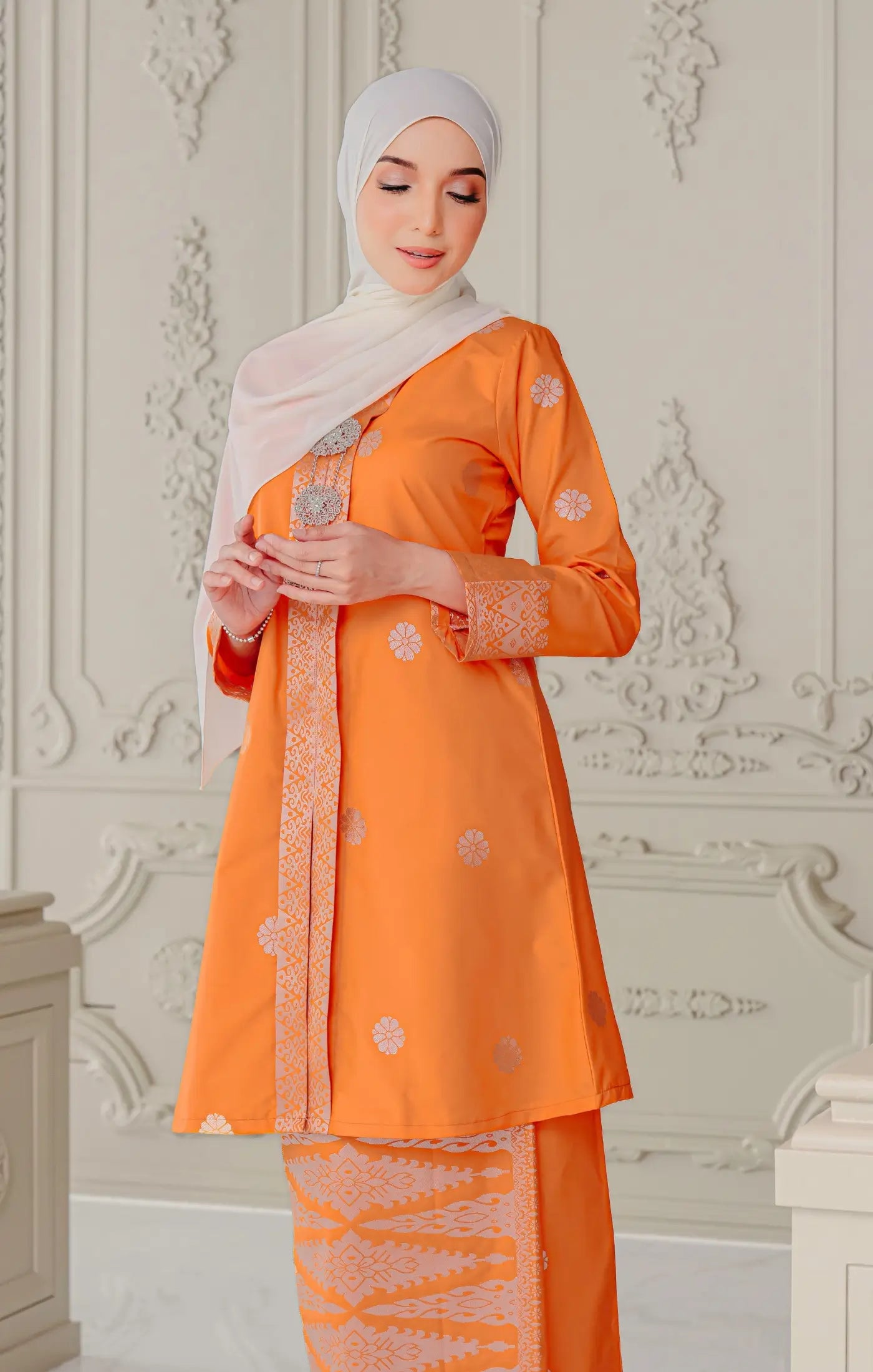
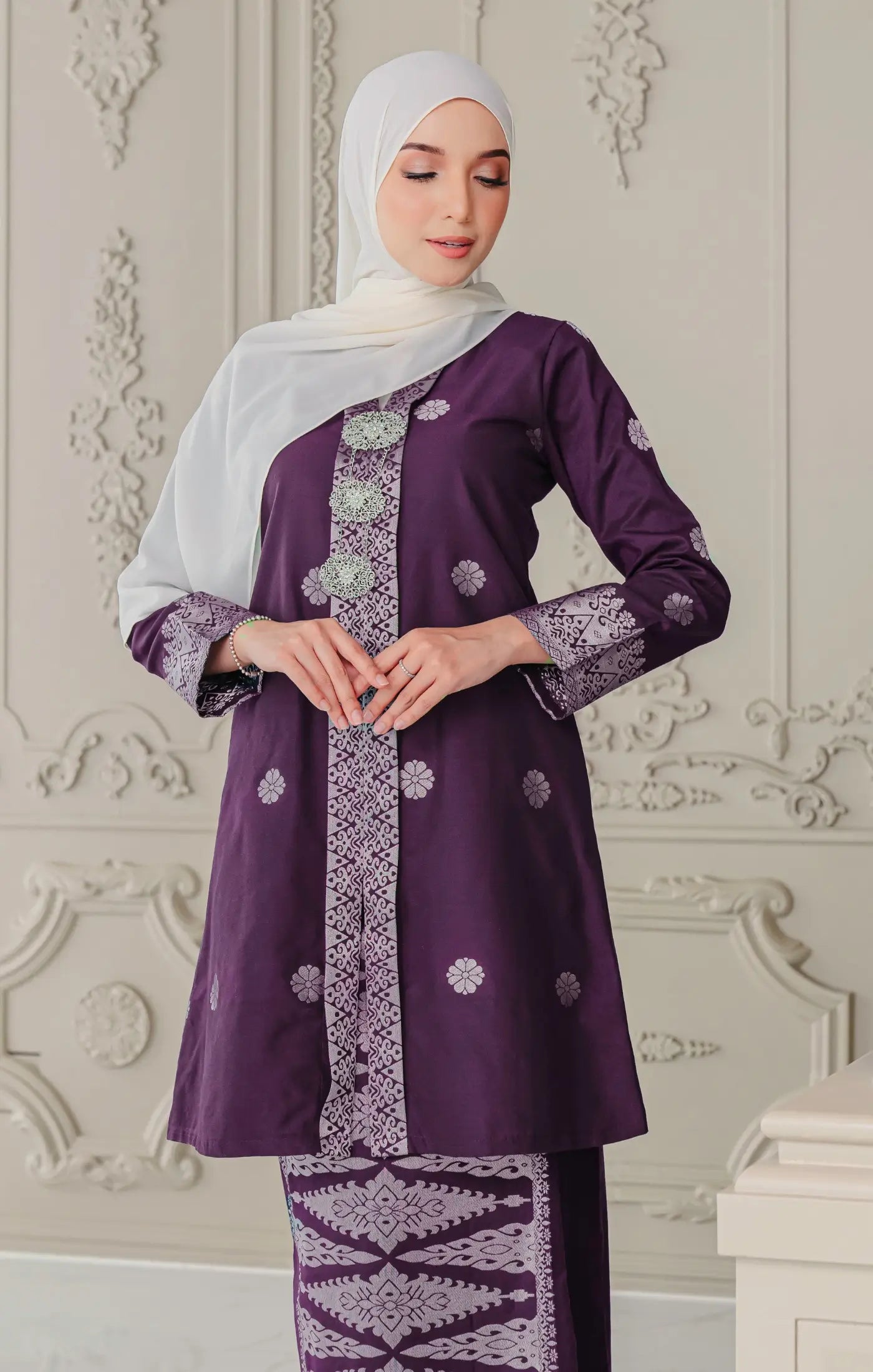
The kerongsang ibu and anak. Traditionally there were no buttons. Instead, a set of three brooches closes the front: one larger kerongsang ibu at the top and two smaller kerongsang anak below it. The bigger and finer the kerongsang ibu, the more it once spoke of the wearer’s standing.
Keep these three in mind and you’ll be able to read any kebaya klasik at a glance.
From Labuh to Pendek: How the Kebaya Changed
The oldest Malay kebaya was the kebaya labuh, a long, loose garment falling well below the knee and worn with a kain batik sarung. Over time it was shortened, first to just below or just above the knee, a length often called sekerat tiang, and later to a hip-length kebaya pendek that kept the same traditional cut. By the late 1920s, kebaya that followed the shape of the body began to appear, and in the decades that followed, brighter colours and lighter imported fabrics found their way into the wardrobe.
So when people search for kebaya melayu or kebaya tradisional melayu today, they may mean any point on that journey, from the long labuh of a grandmother’s wedding photo to the neat hip-length version worn at Raya.
Kebaya Melayu or Kebaya Nyonya?
They share a name but tell different stories. The kebaya Melayu, worn by Malay and Jawi Peranakan women, is modest in cut, long-sleeved and often made in songket, brocade or cotton, paired with a kain batik or kain songket. The kebaya Nyonya, worn by Peranakan Chinese women, is usually a shorter, more fitted blouse in sheer fabric with fine embroidered edges. Our collection focuses on the Malay kebaya.
What You’ll Find in Our Baju Kebaya Tradisional Collection
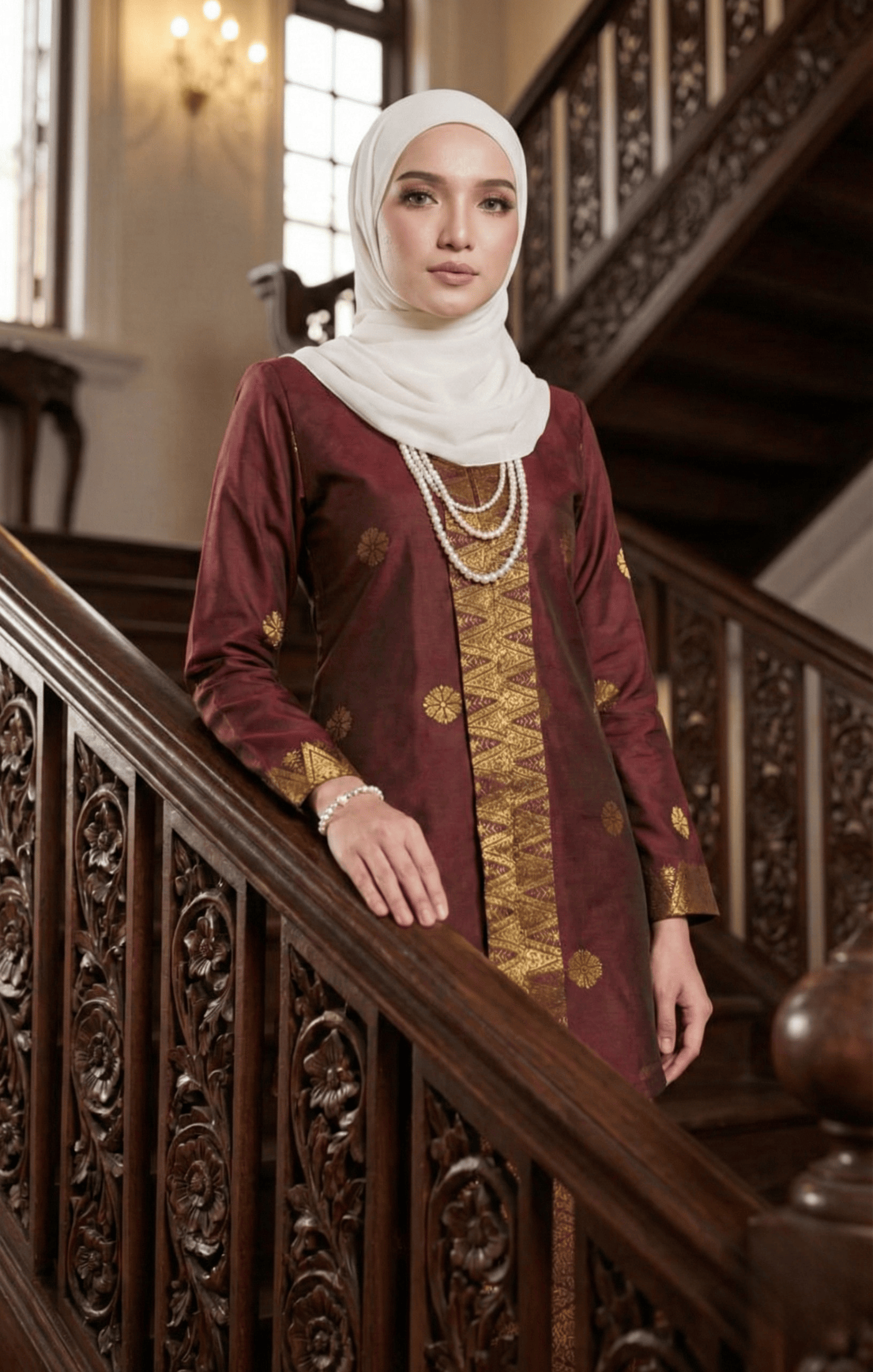
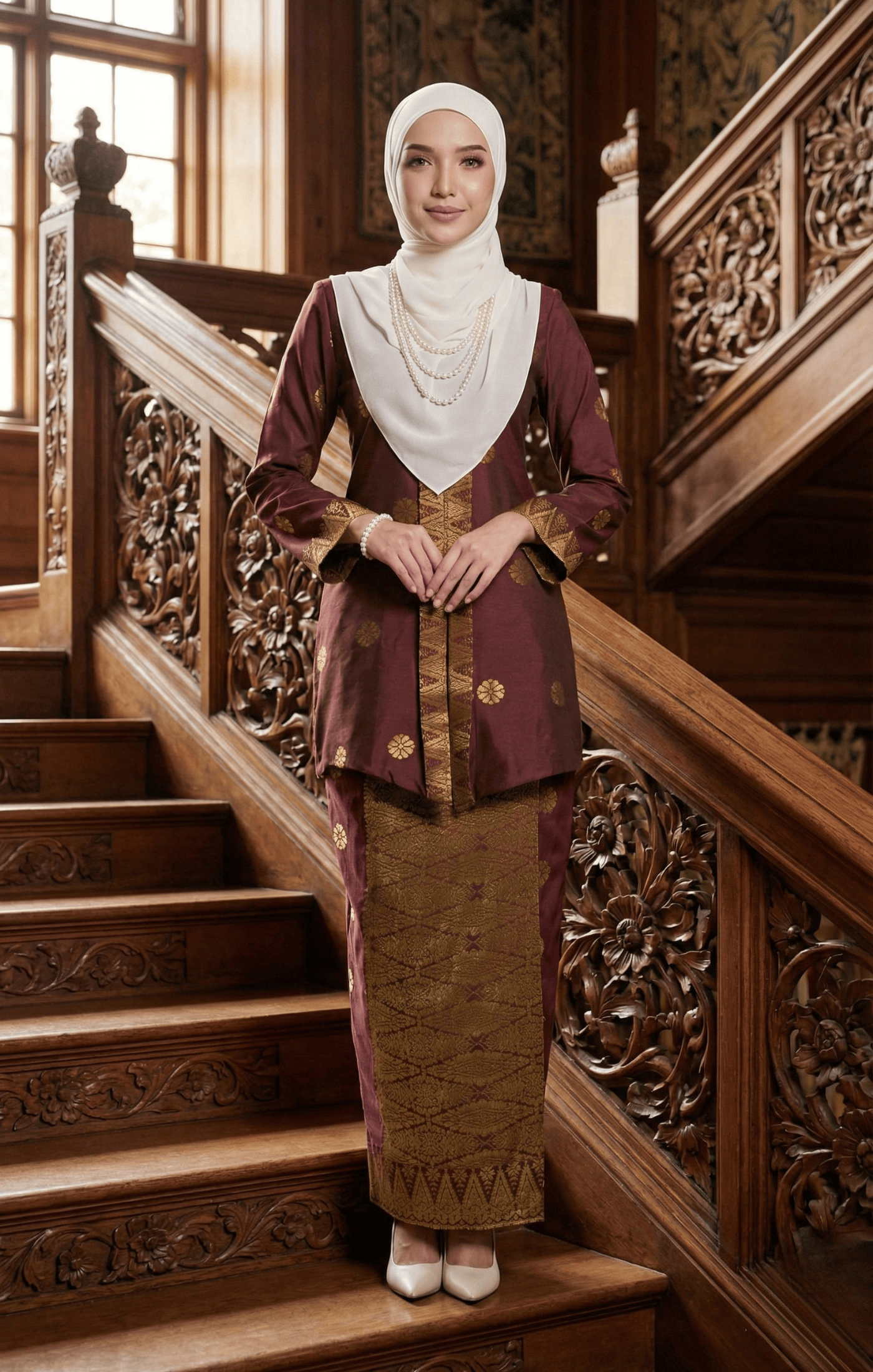
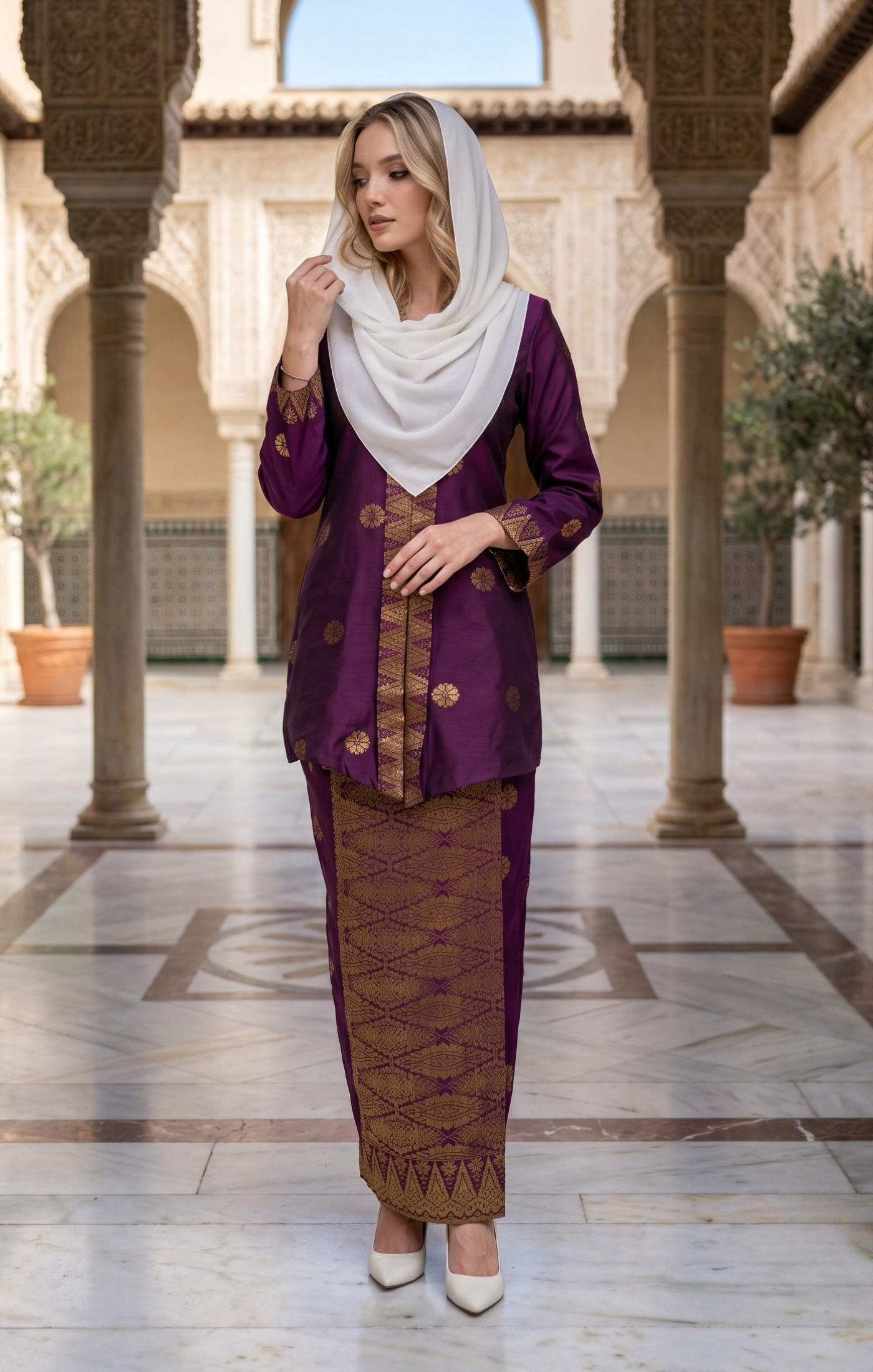
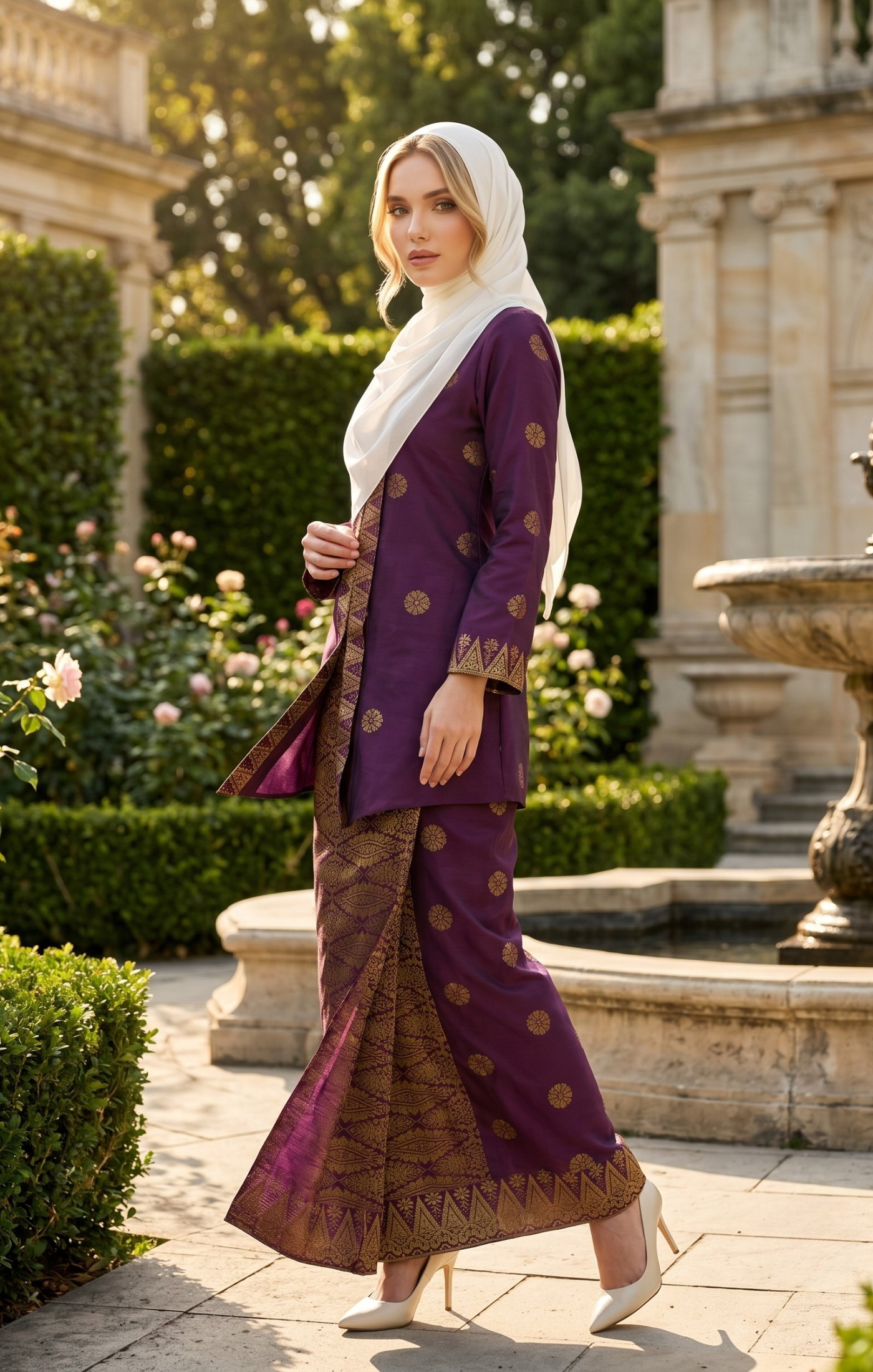
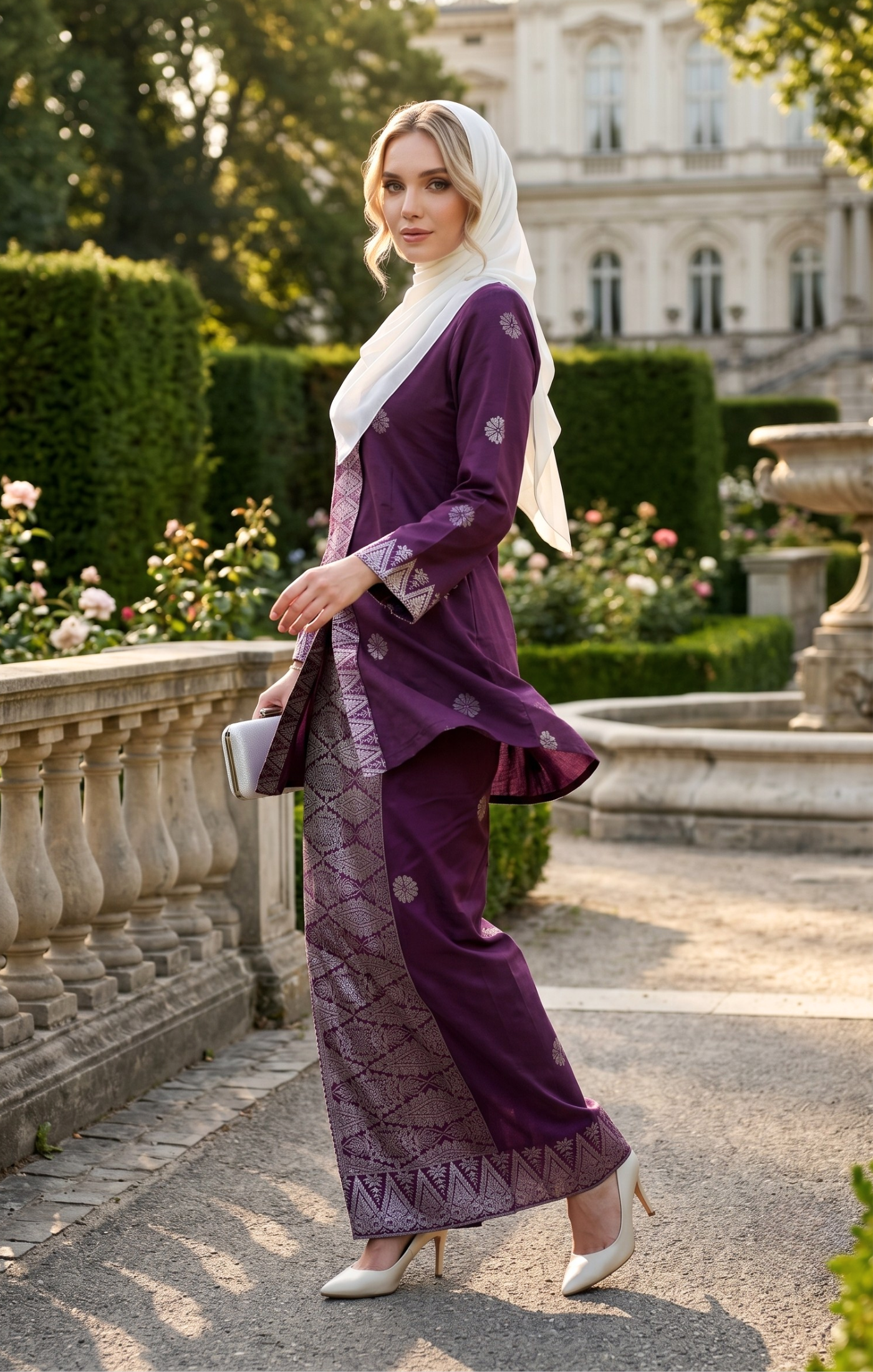
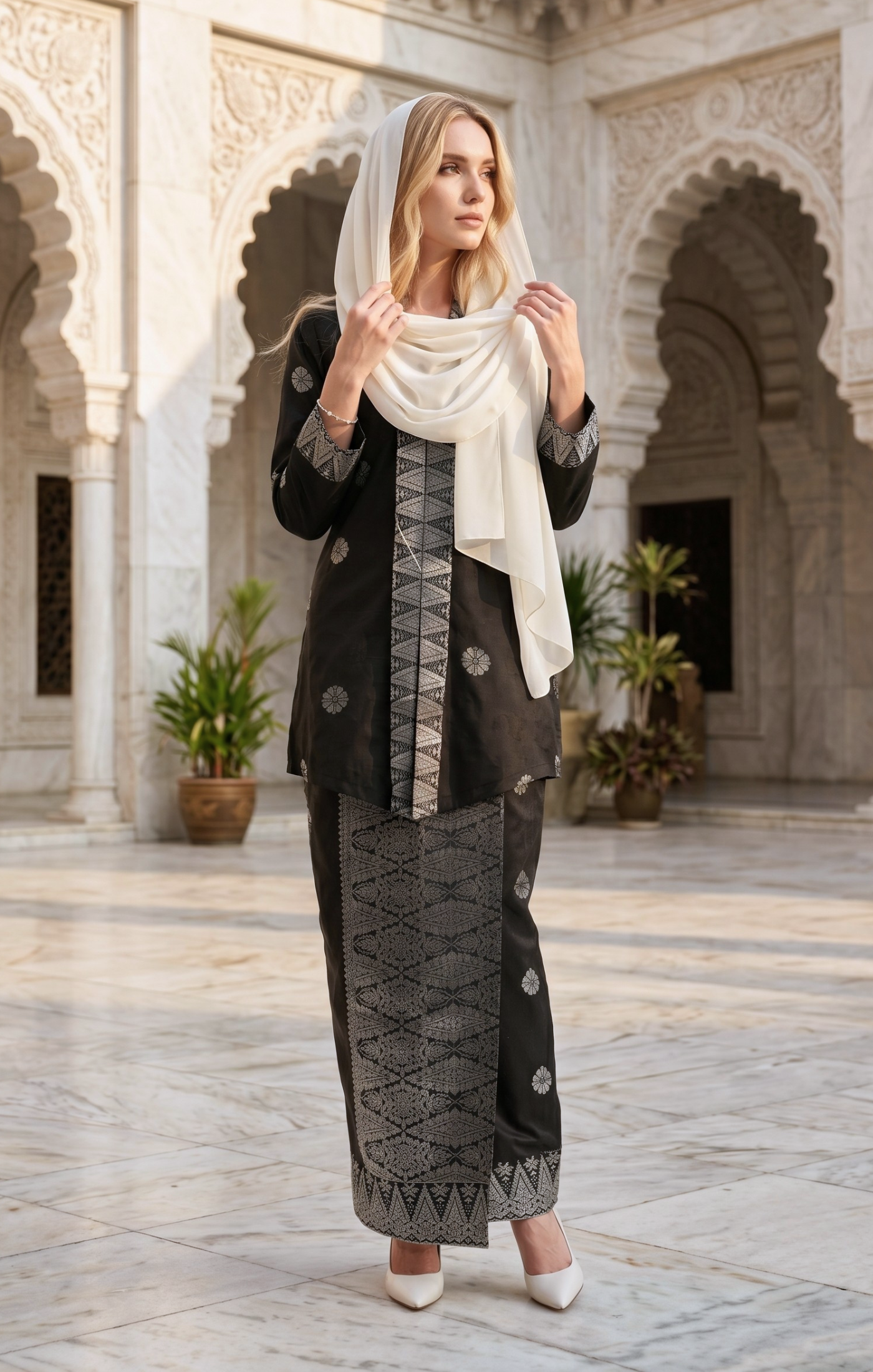
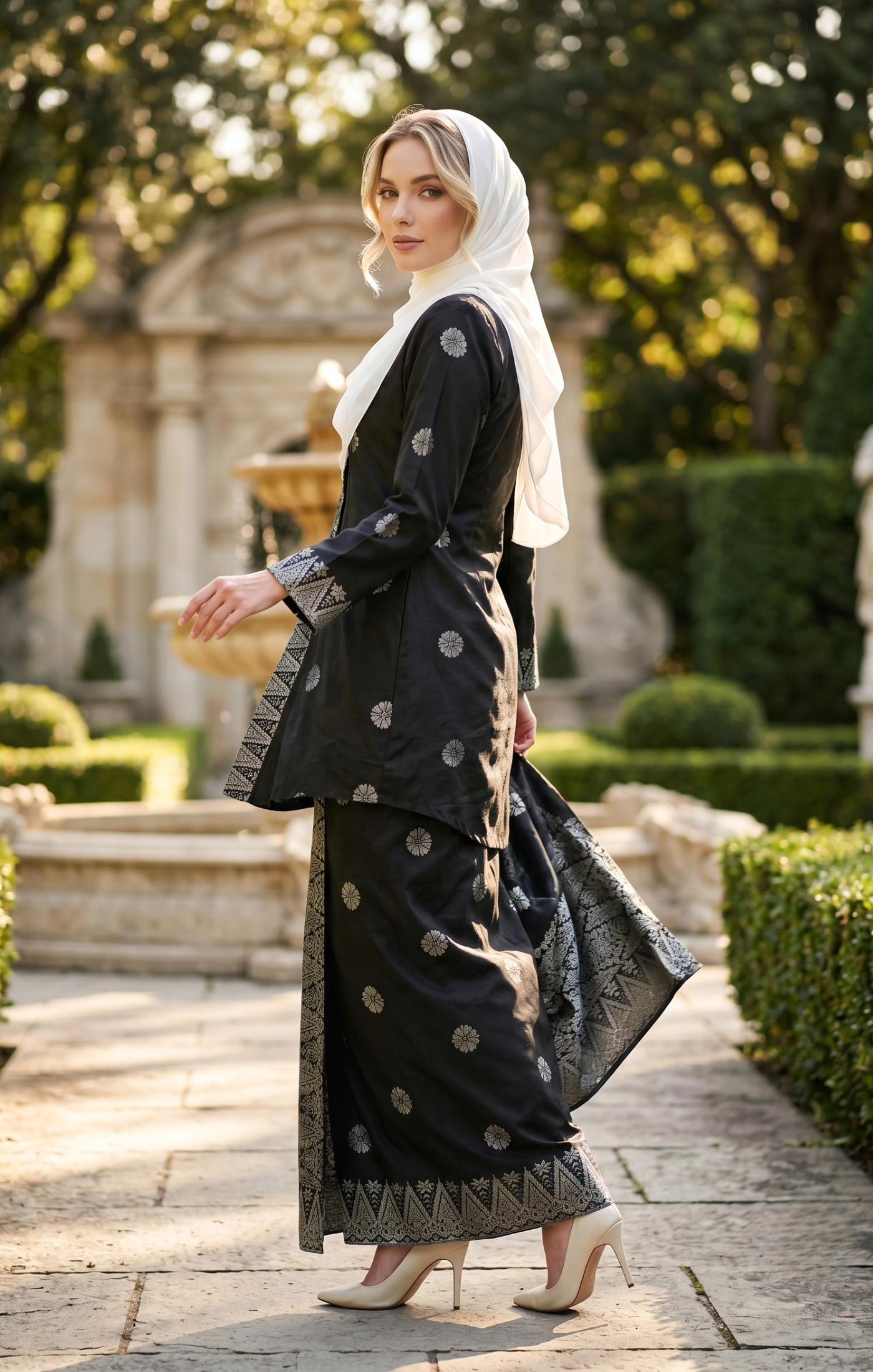
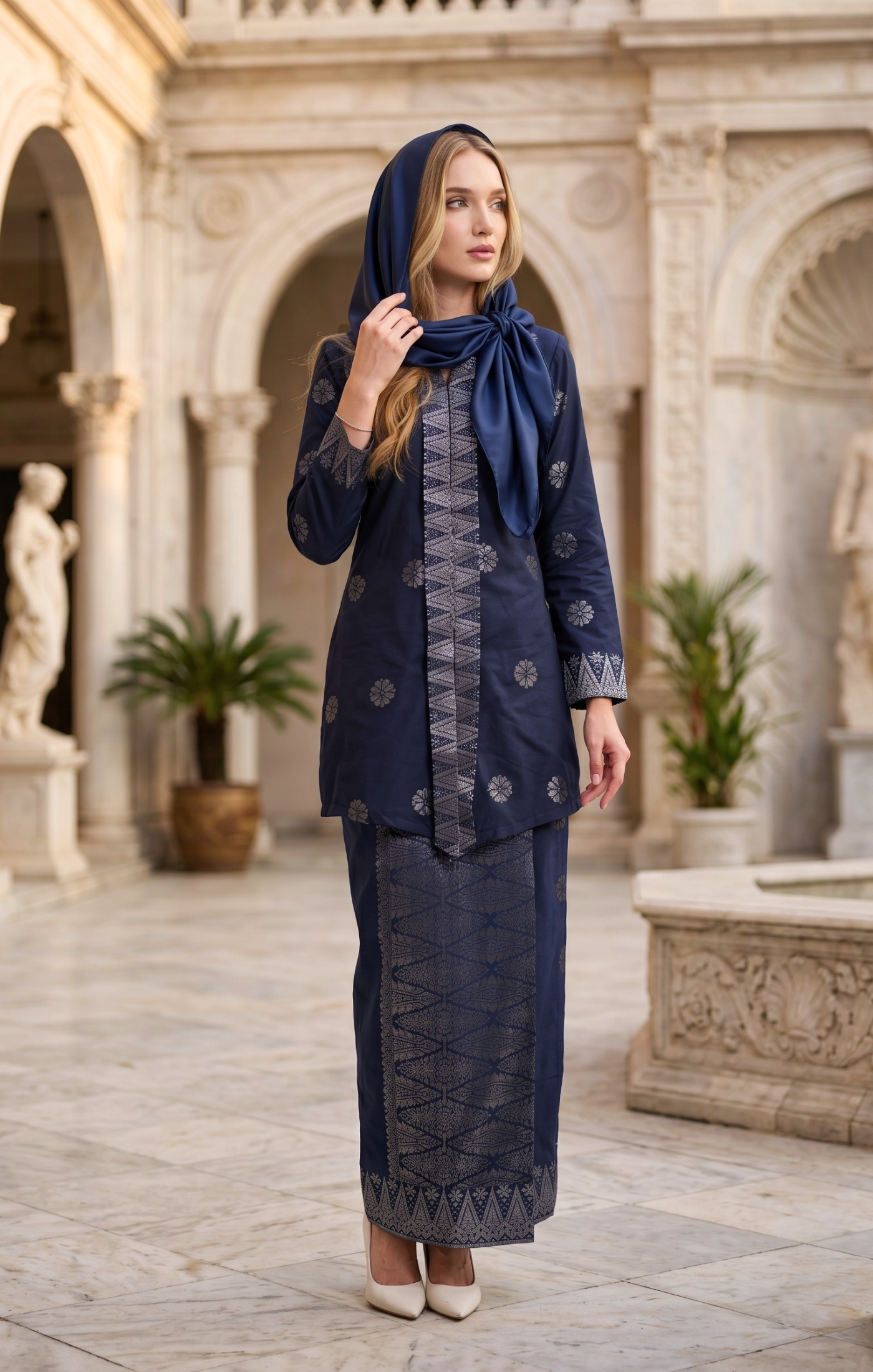
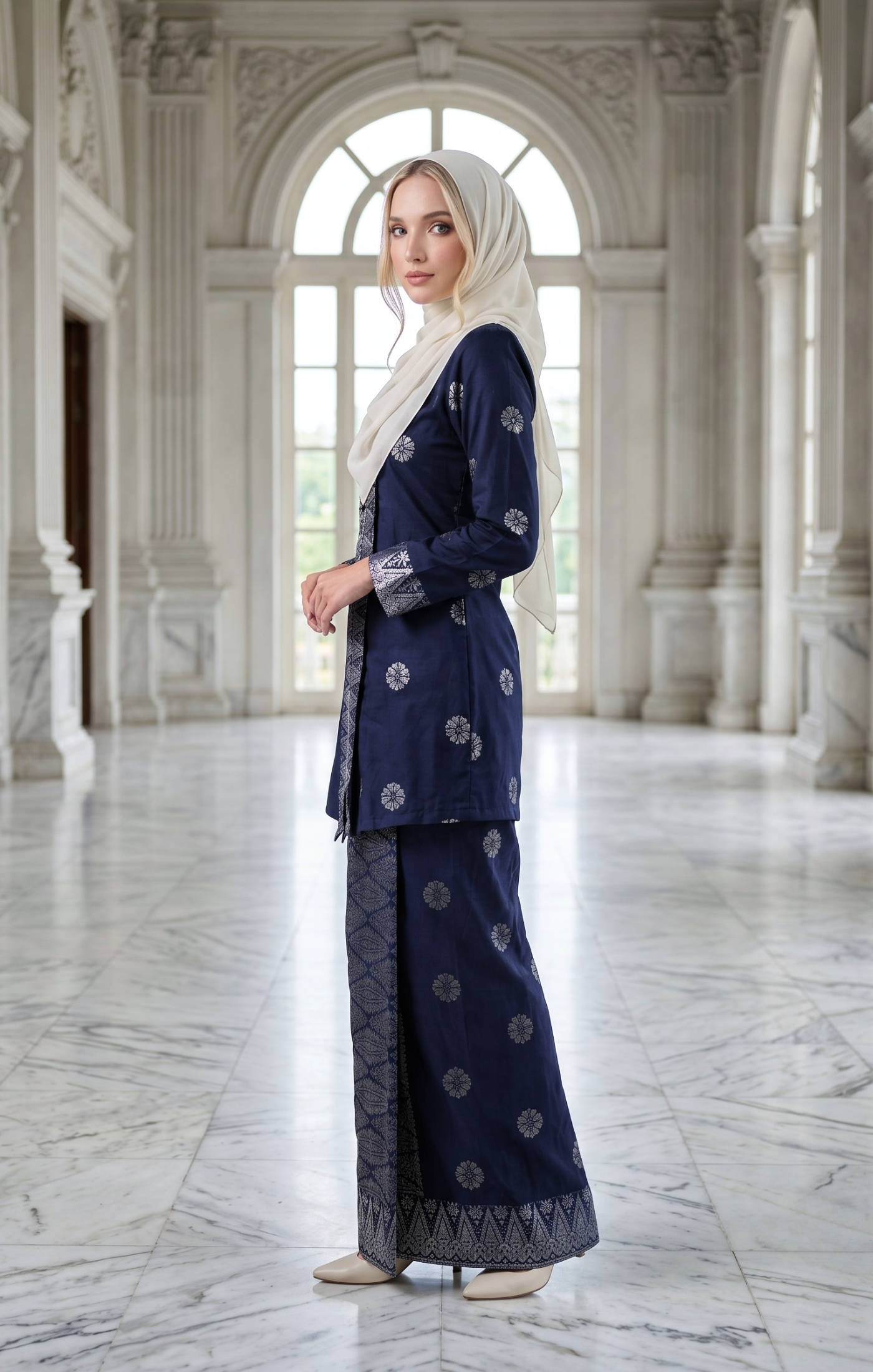
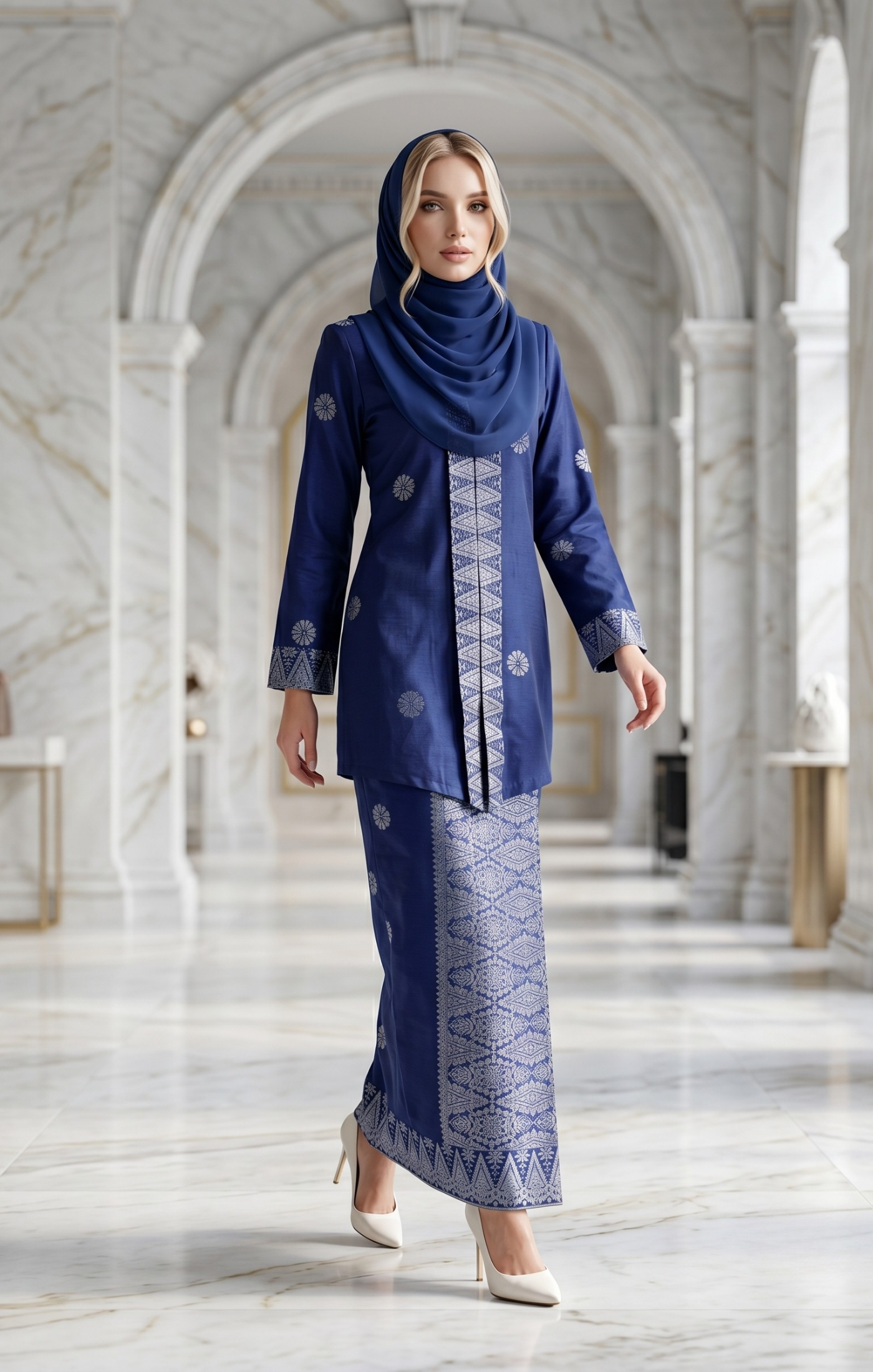
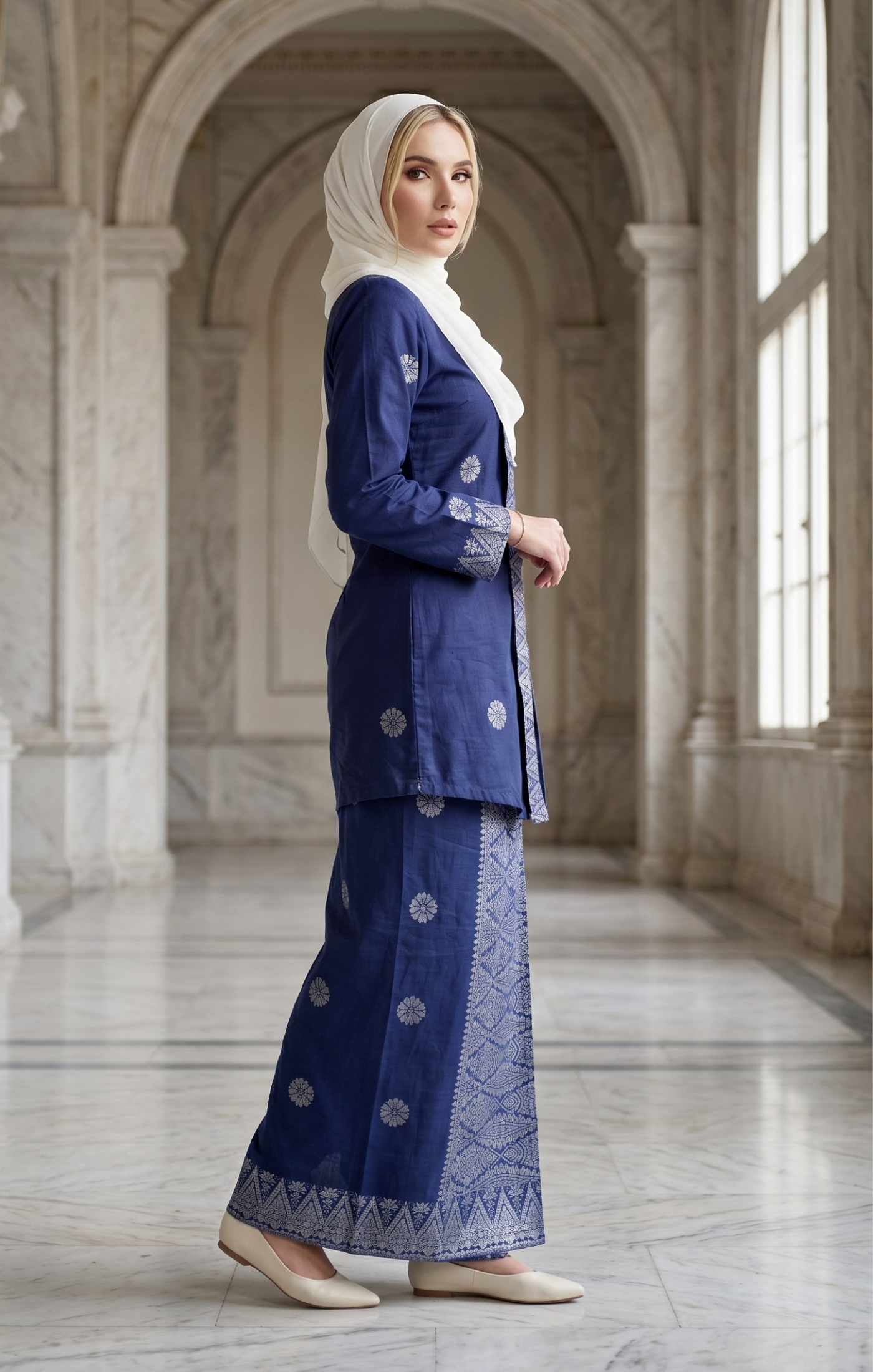
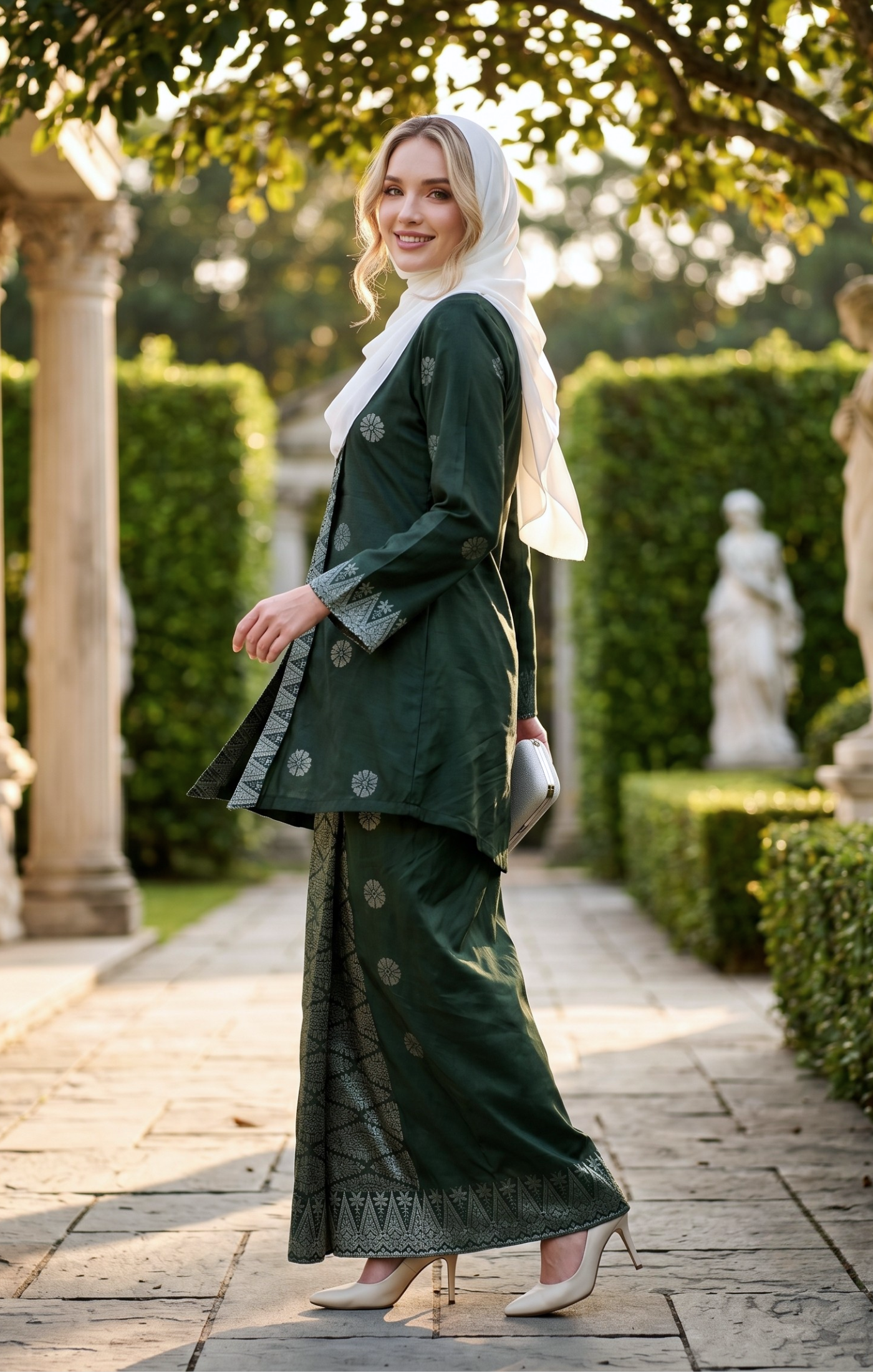
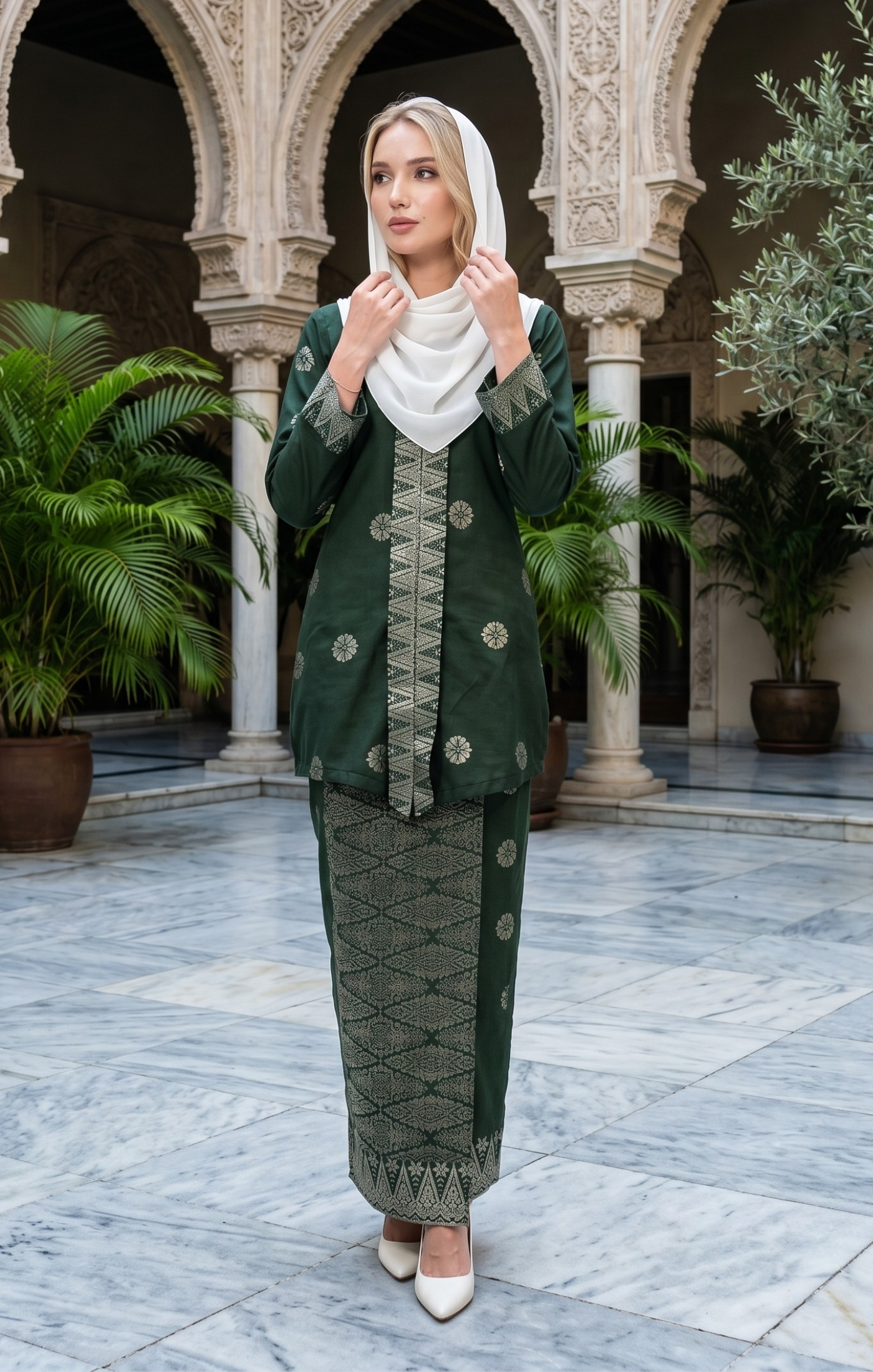
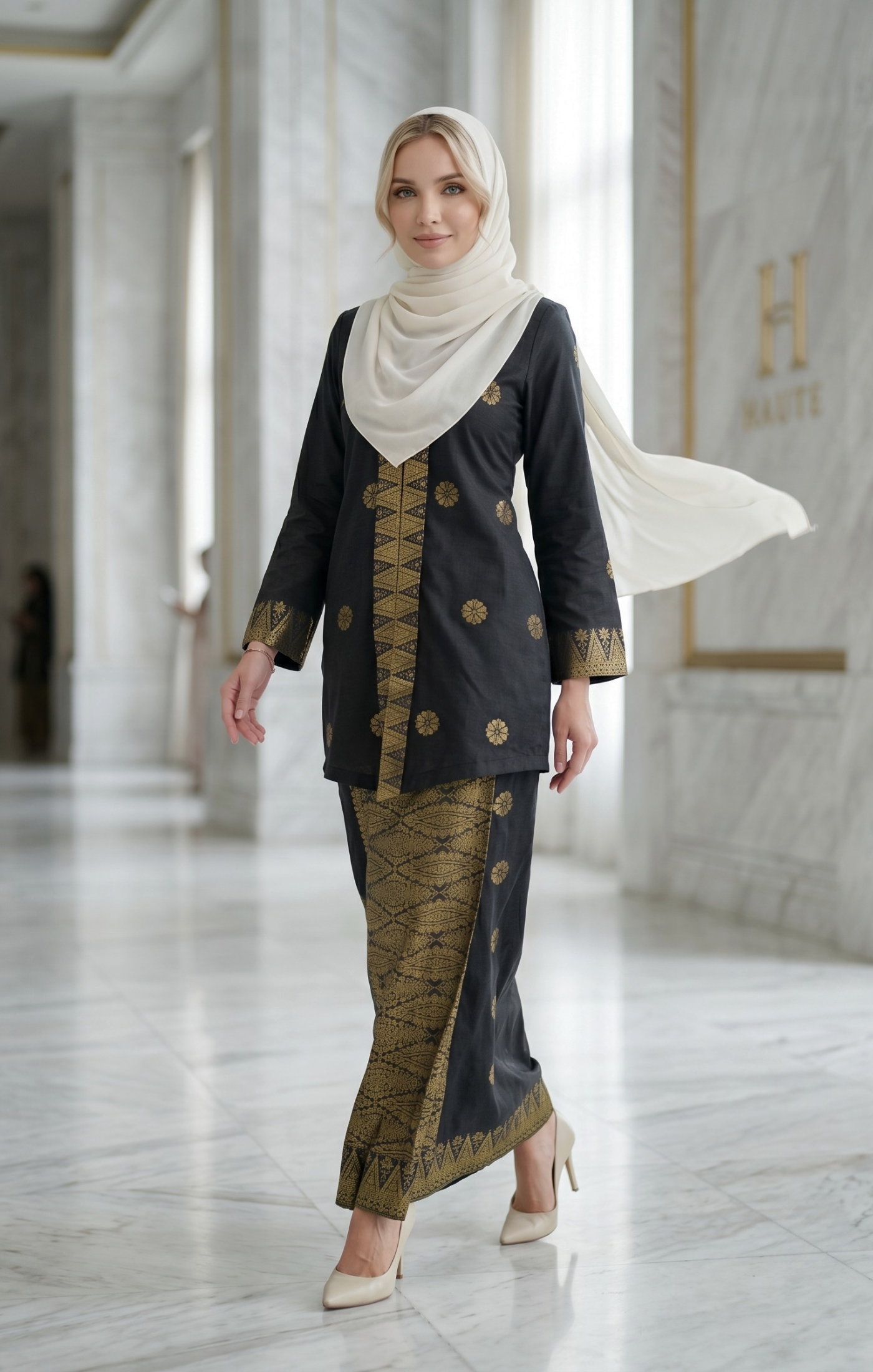
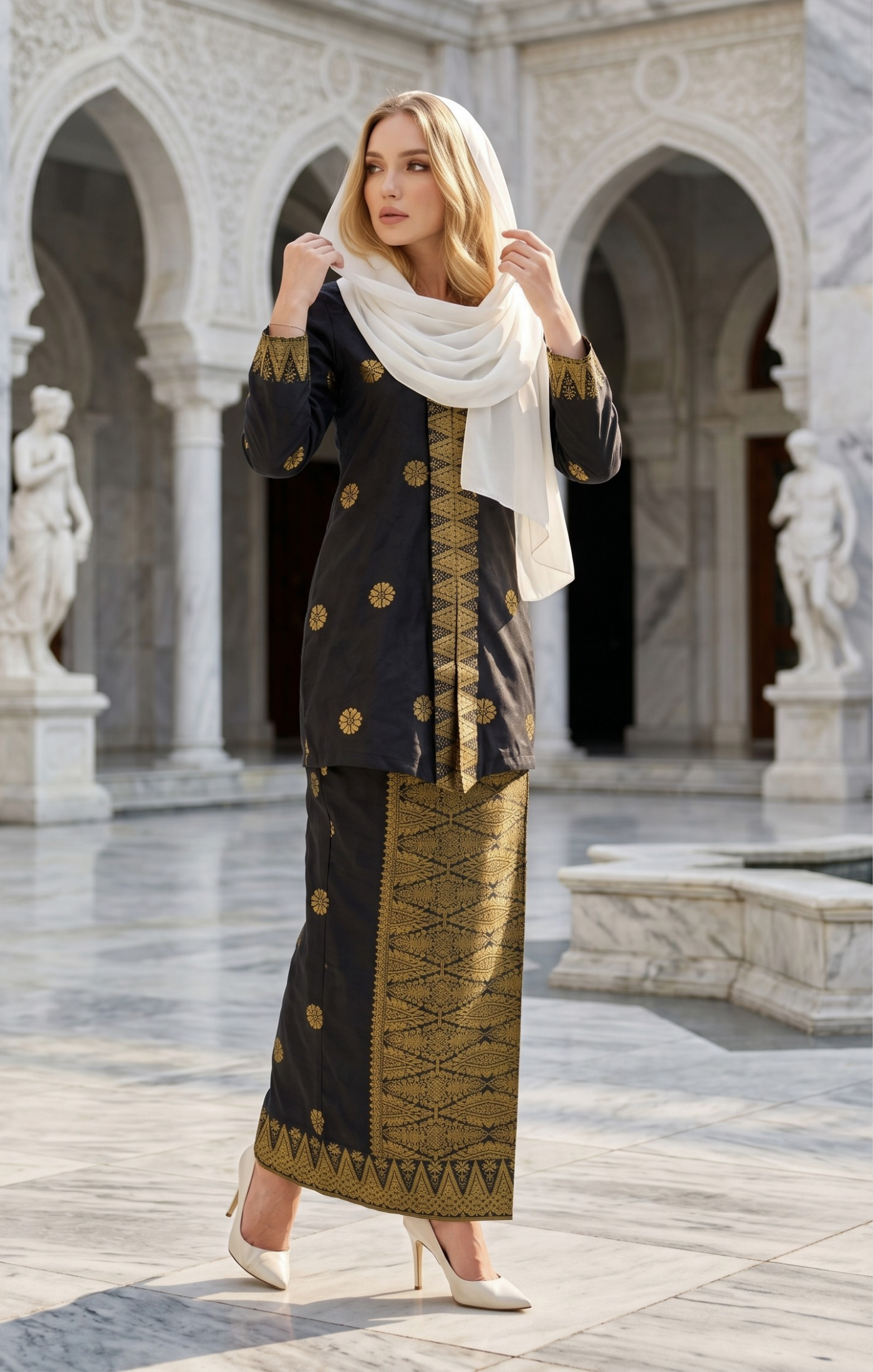
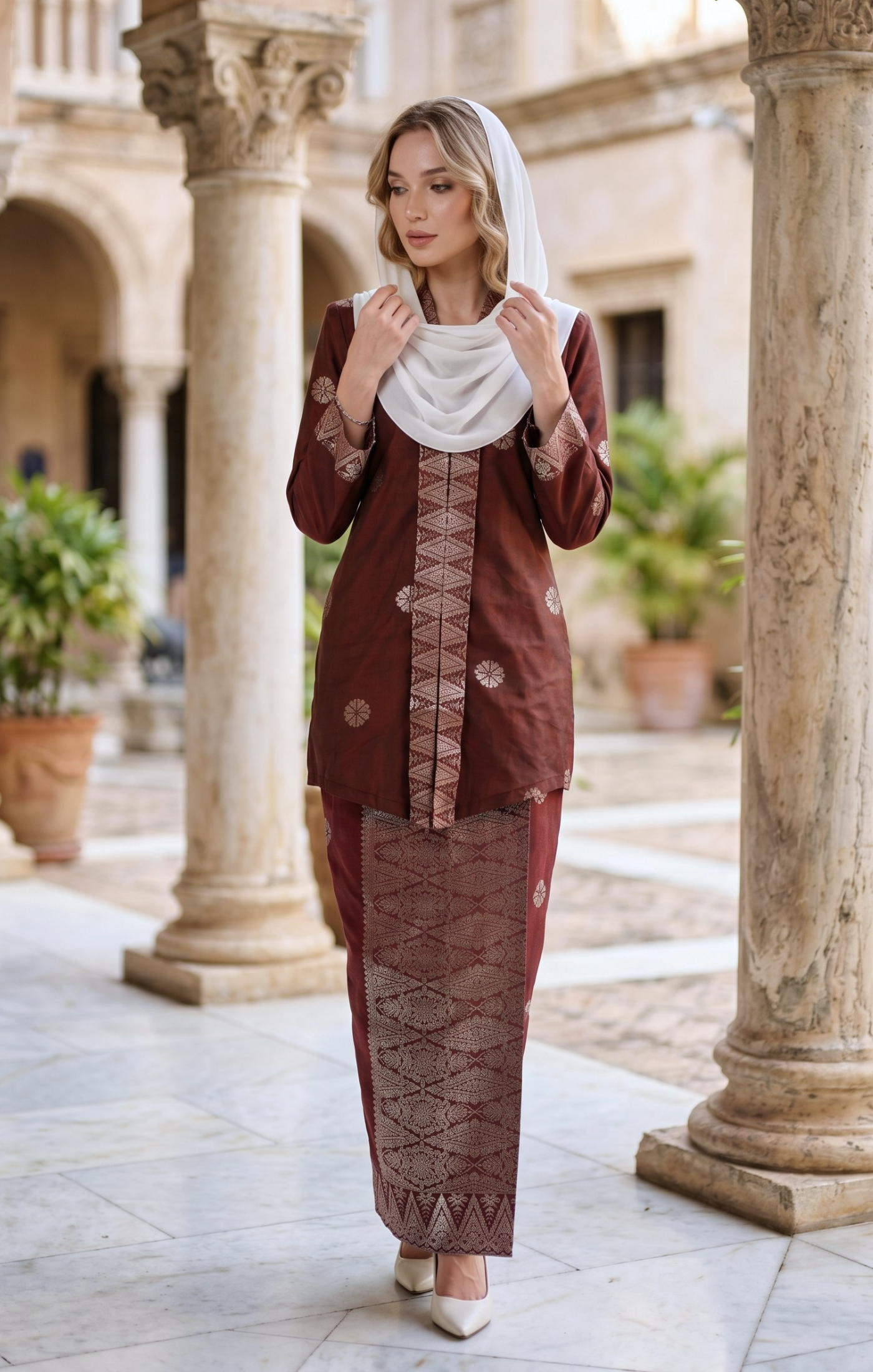
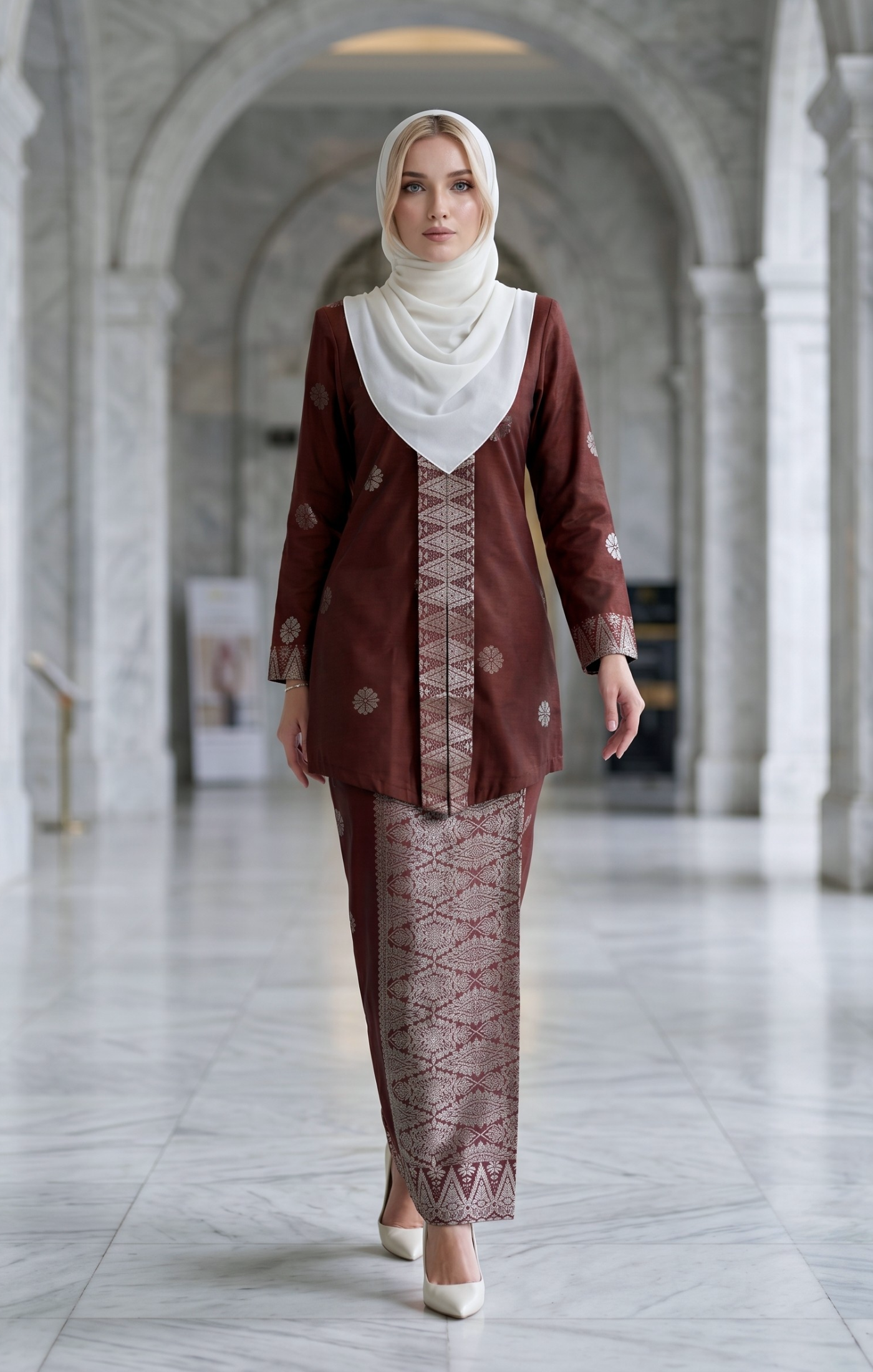
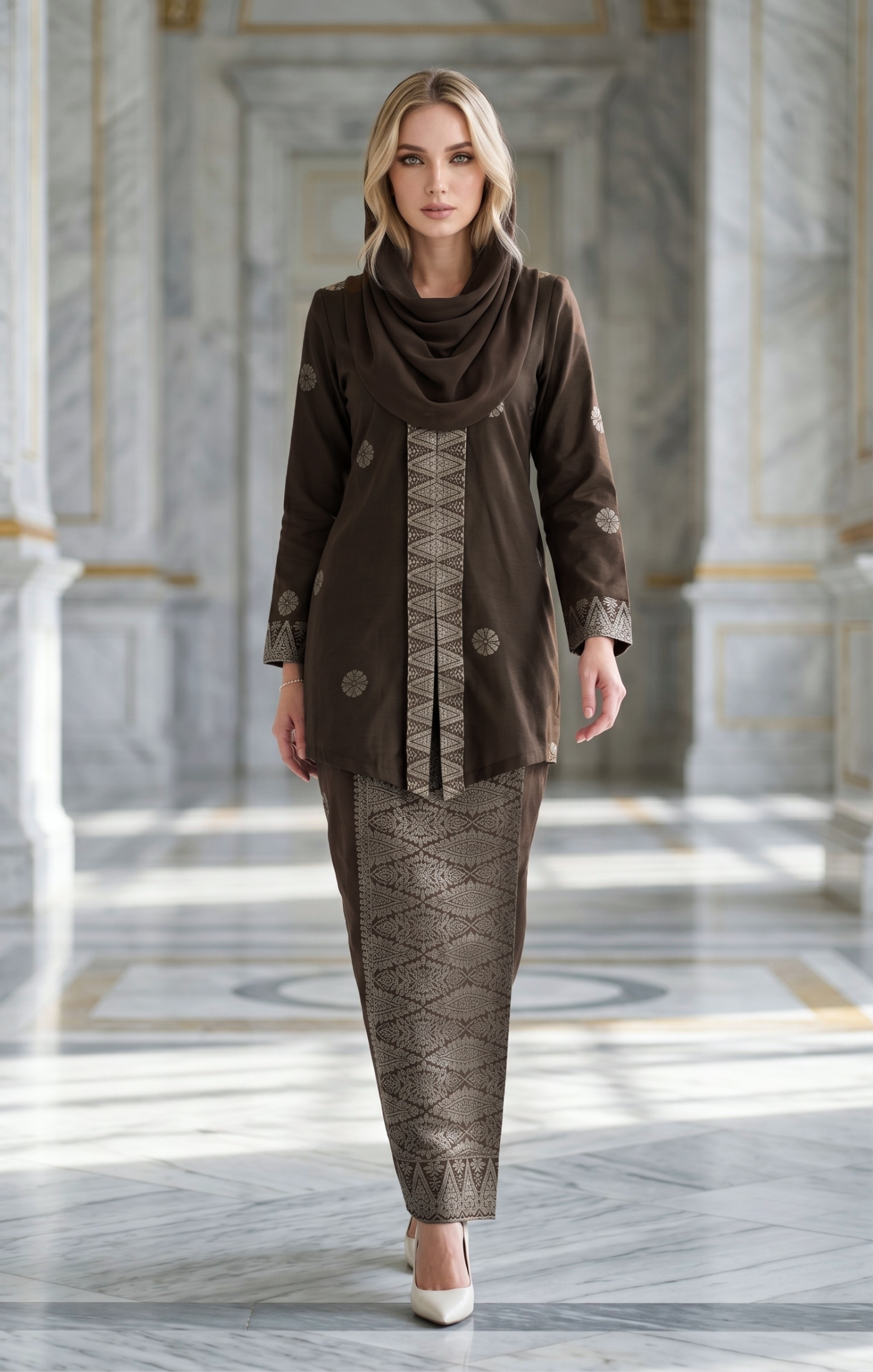
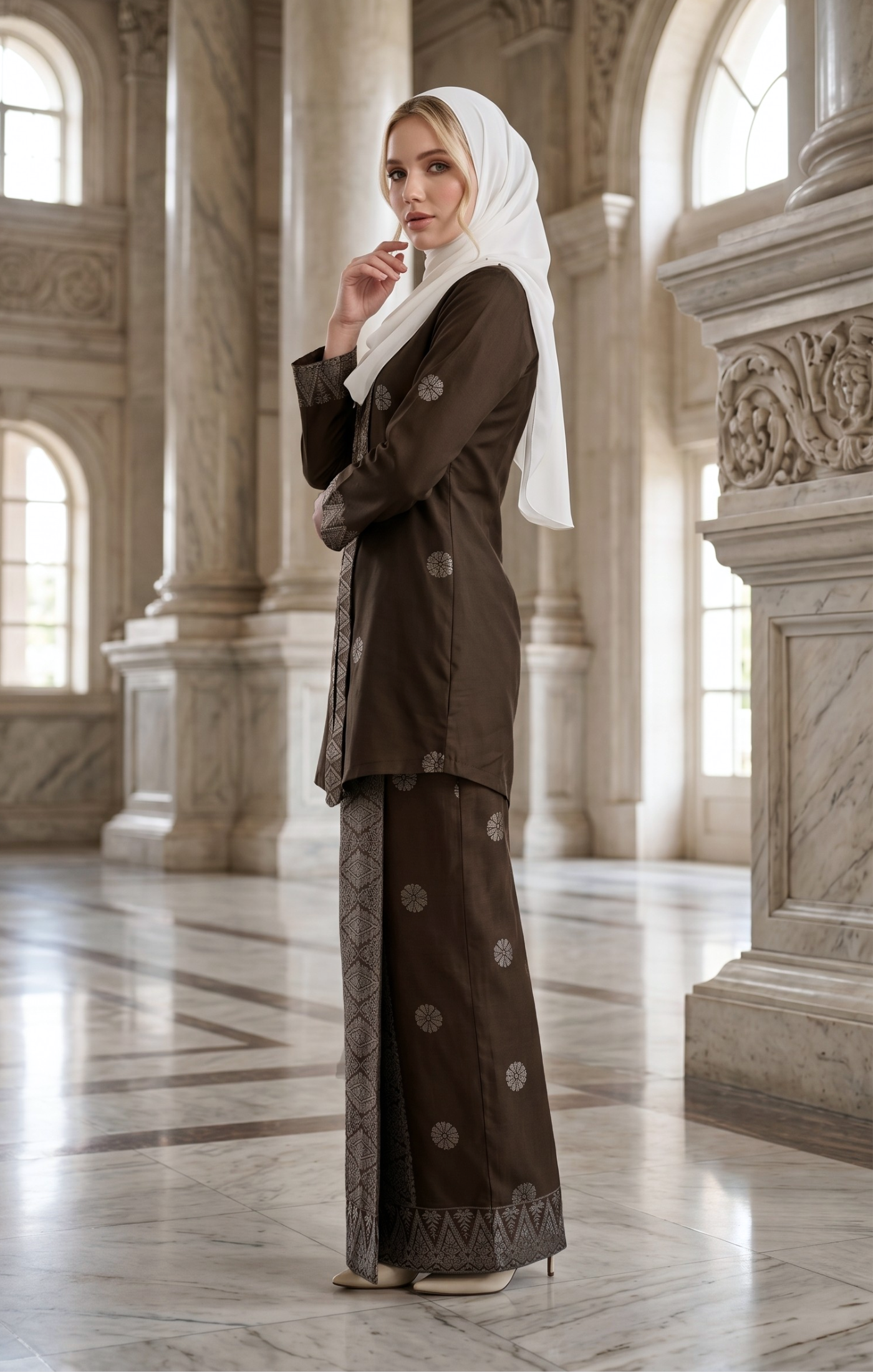
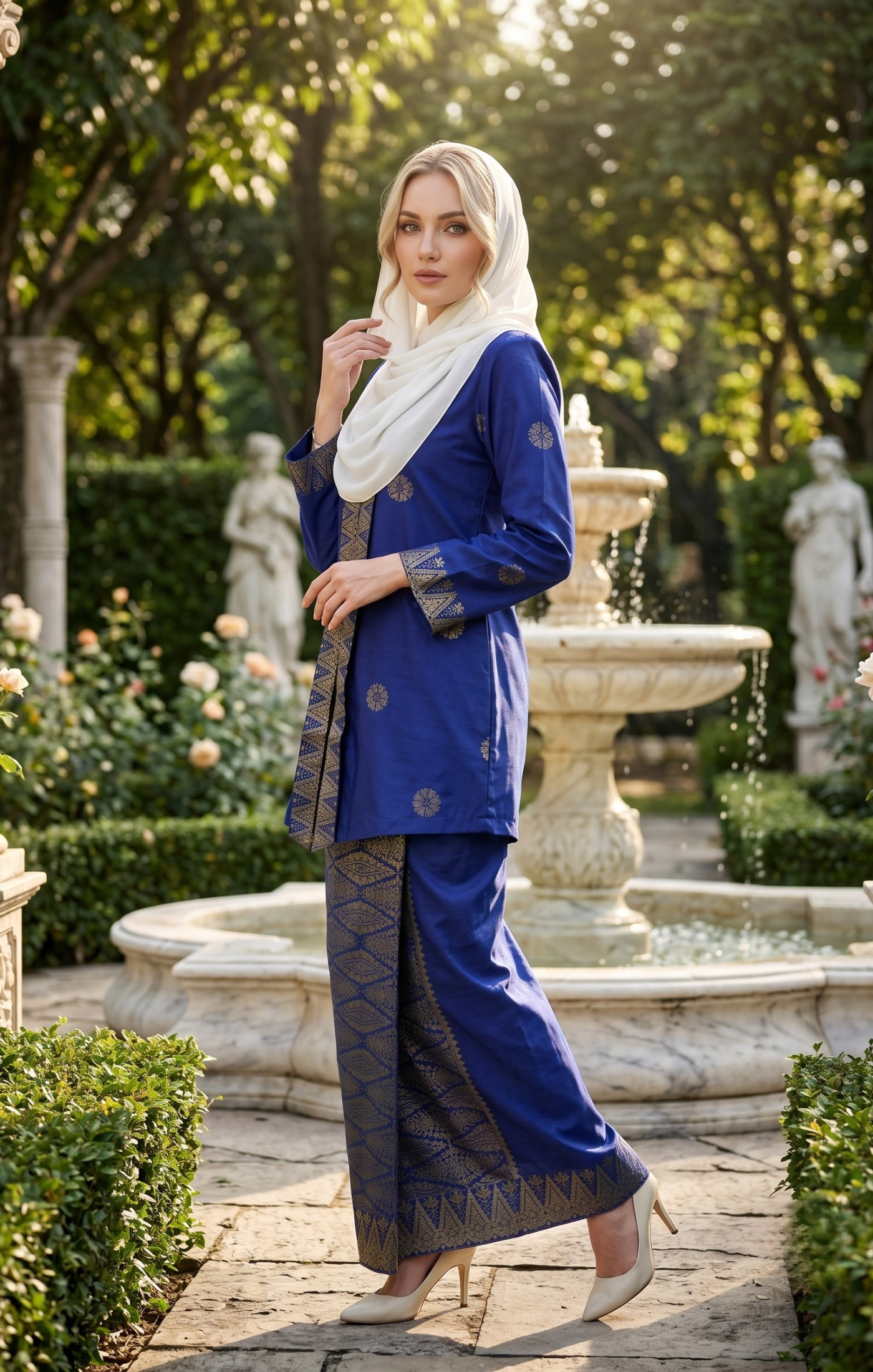
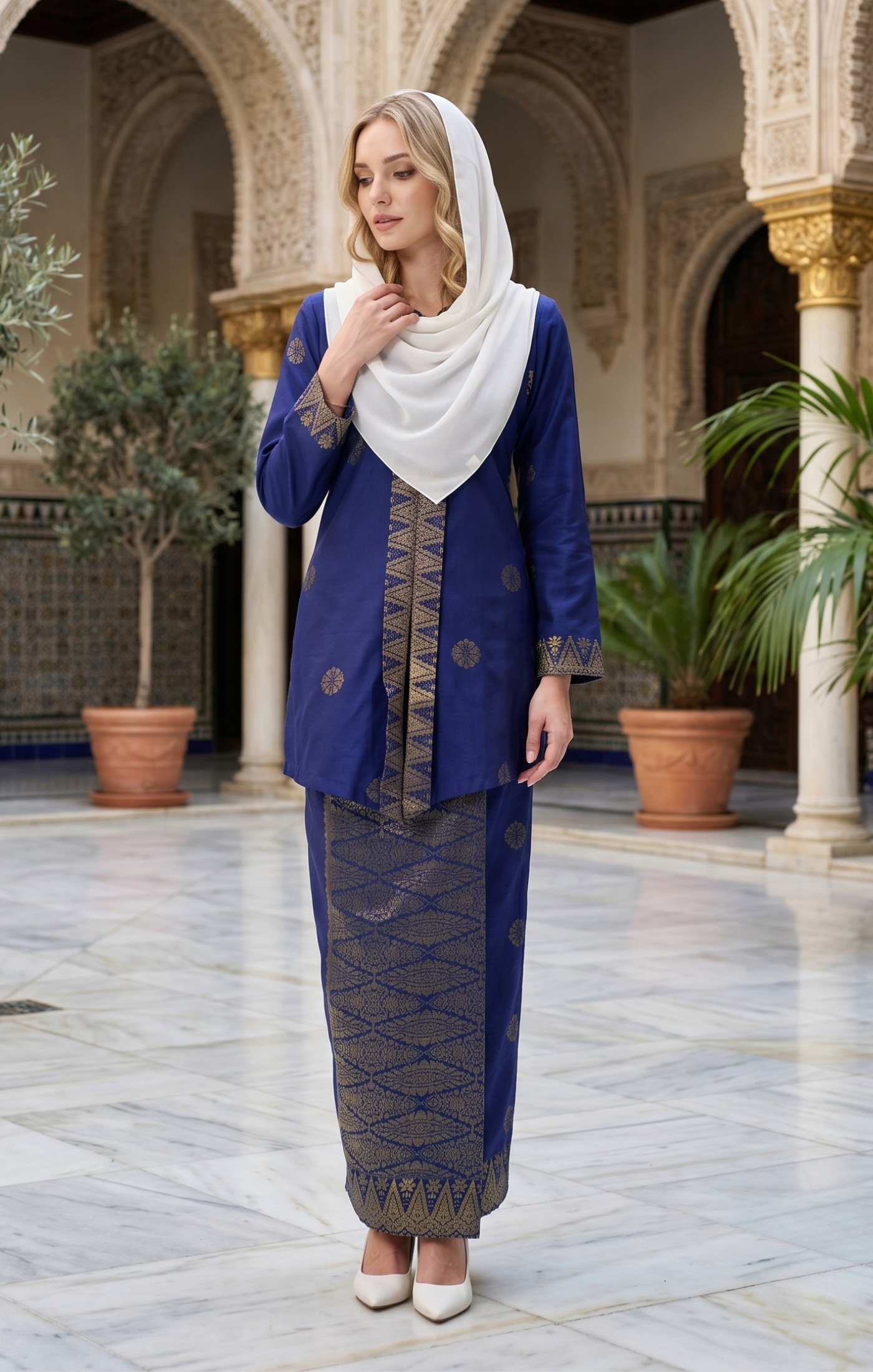
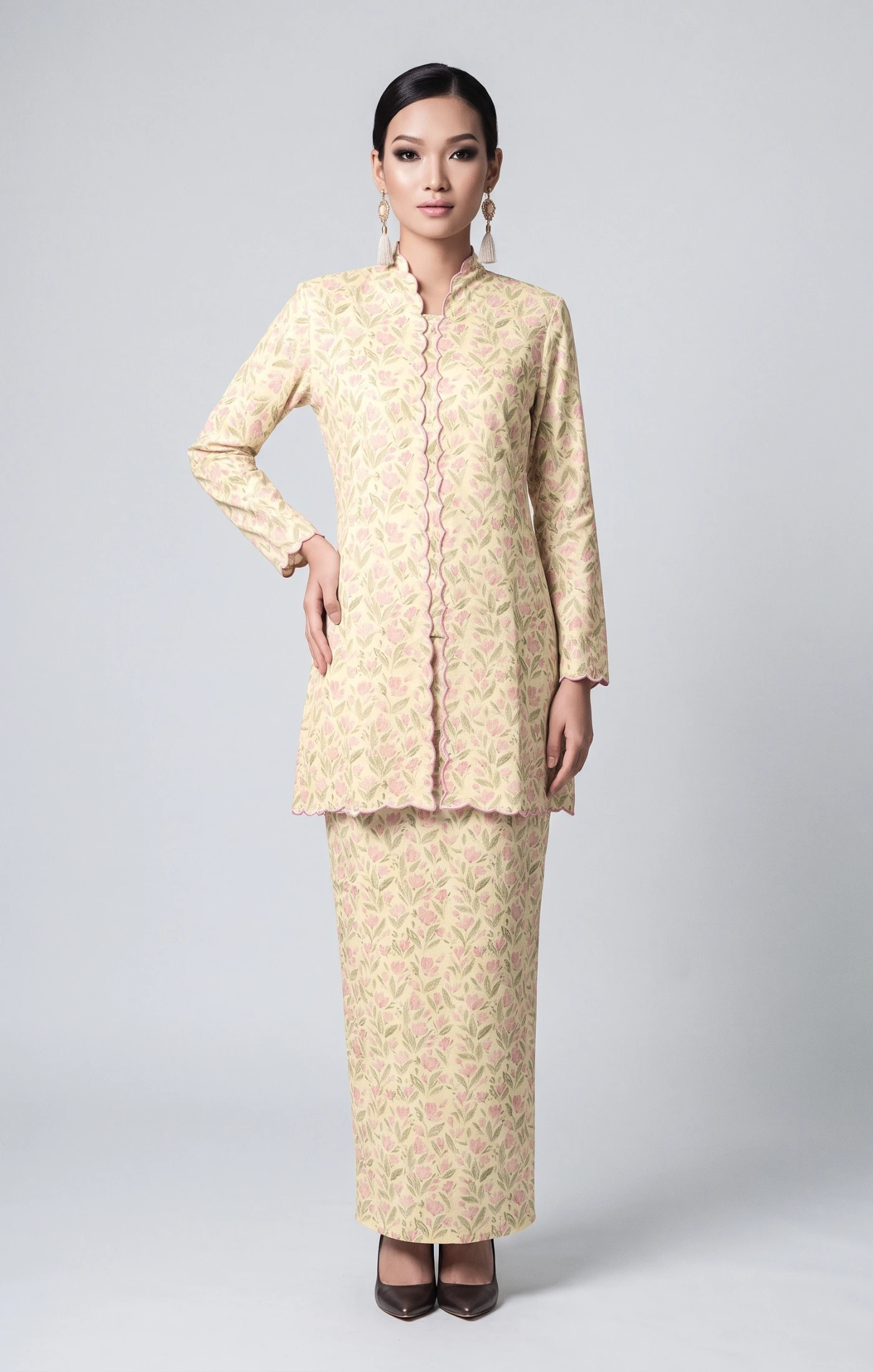
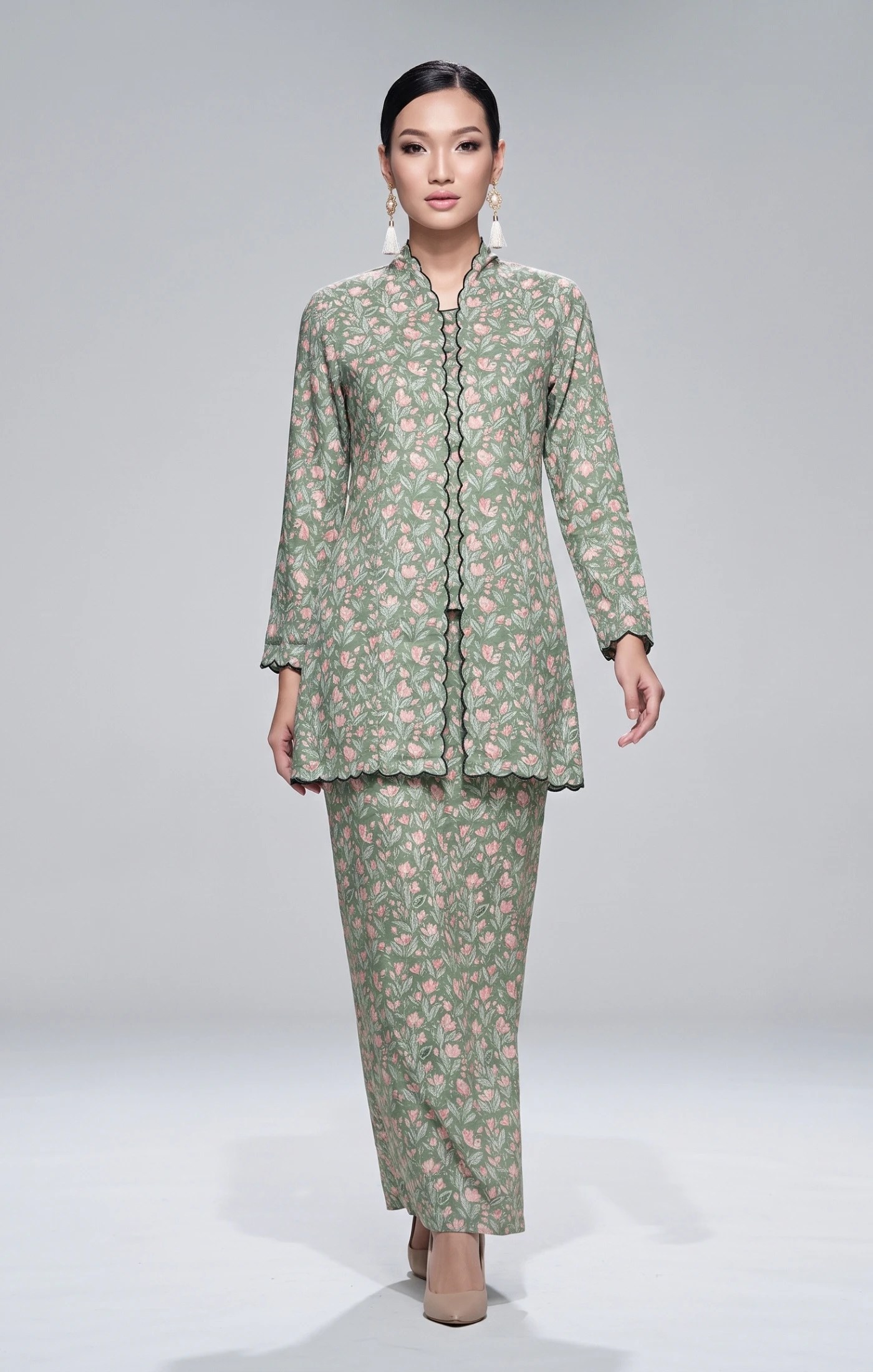
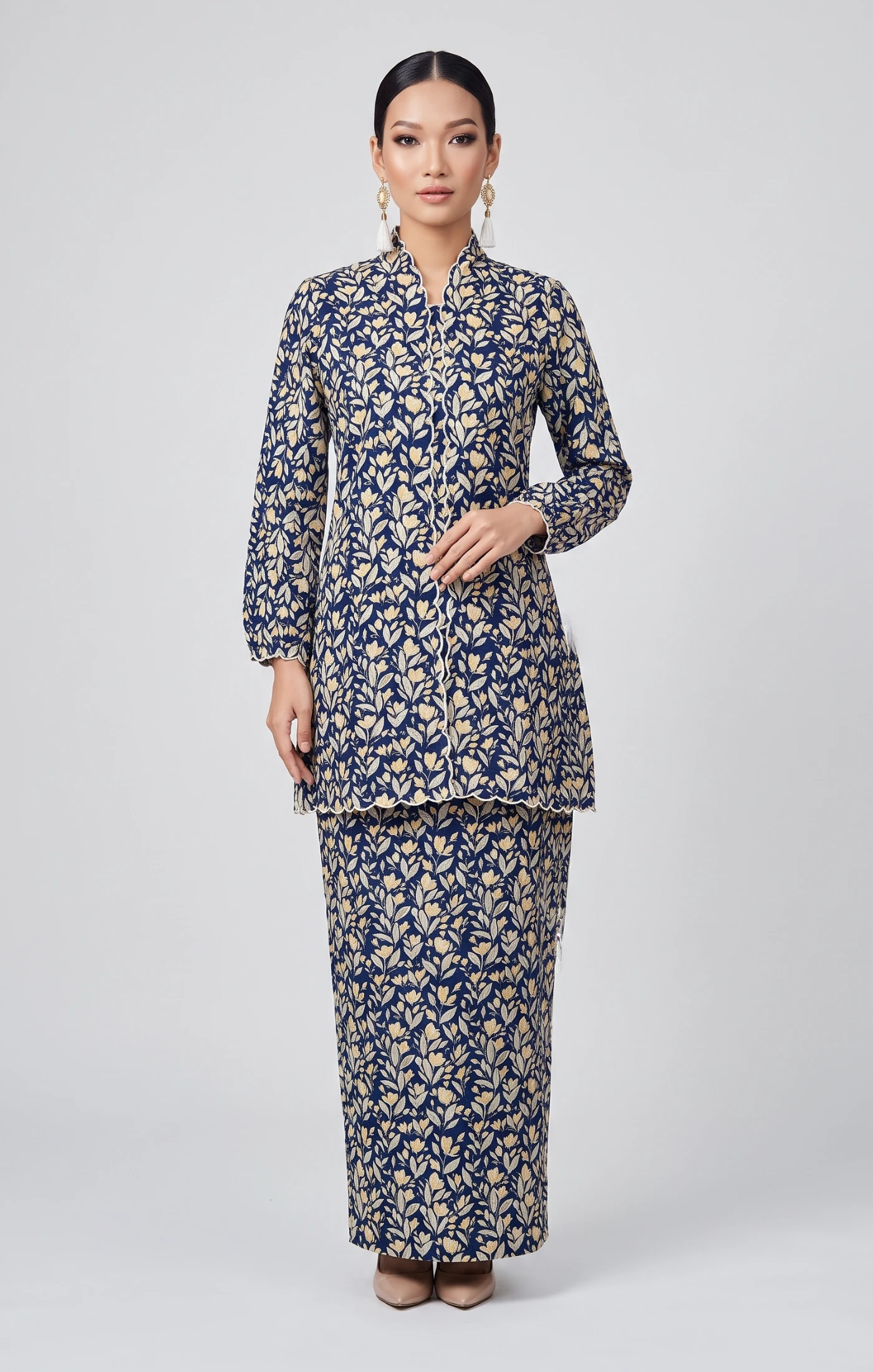
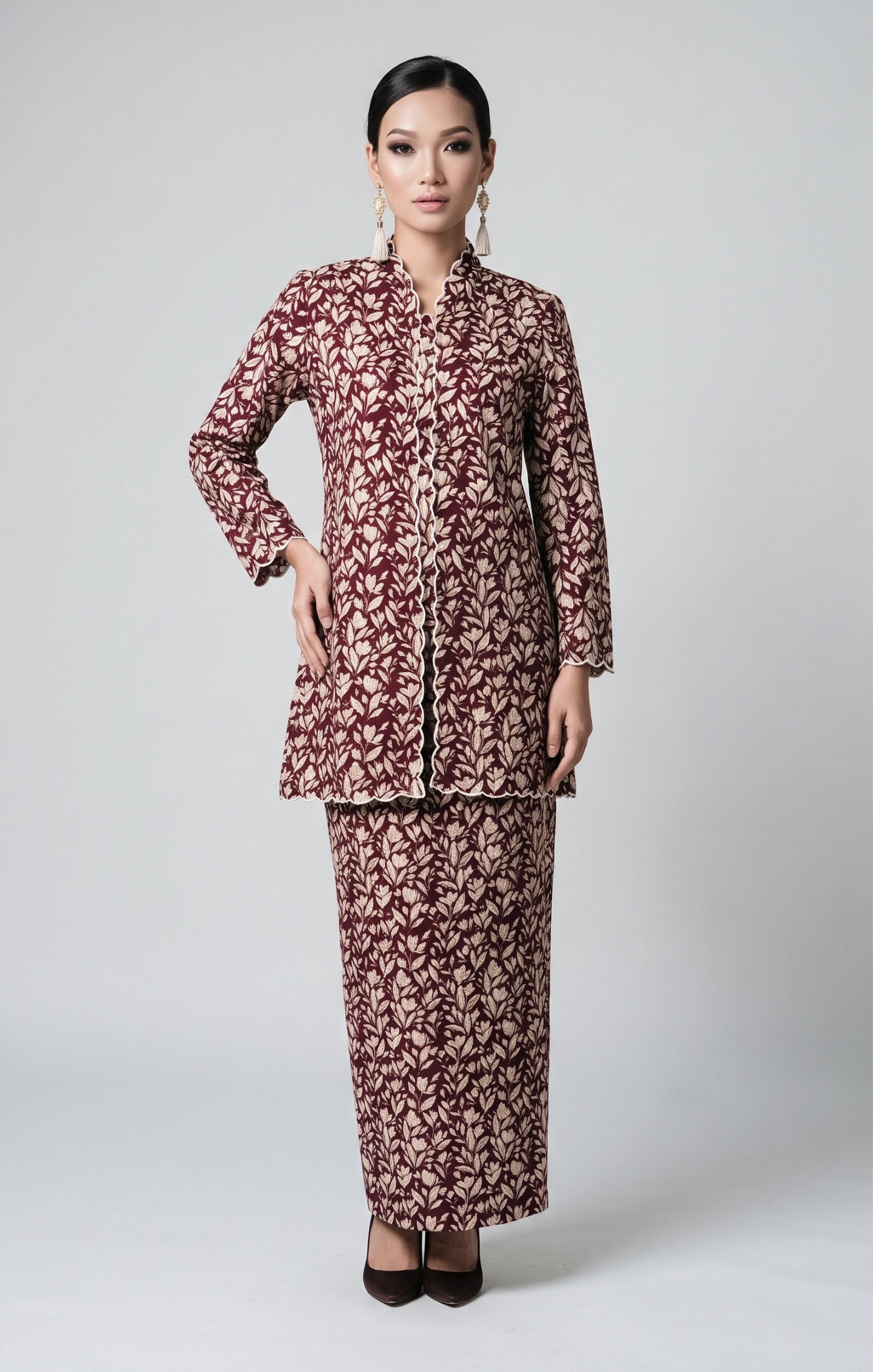
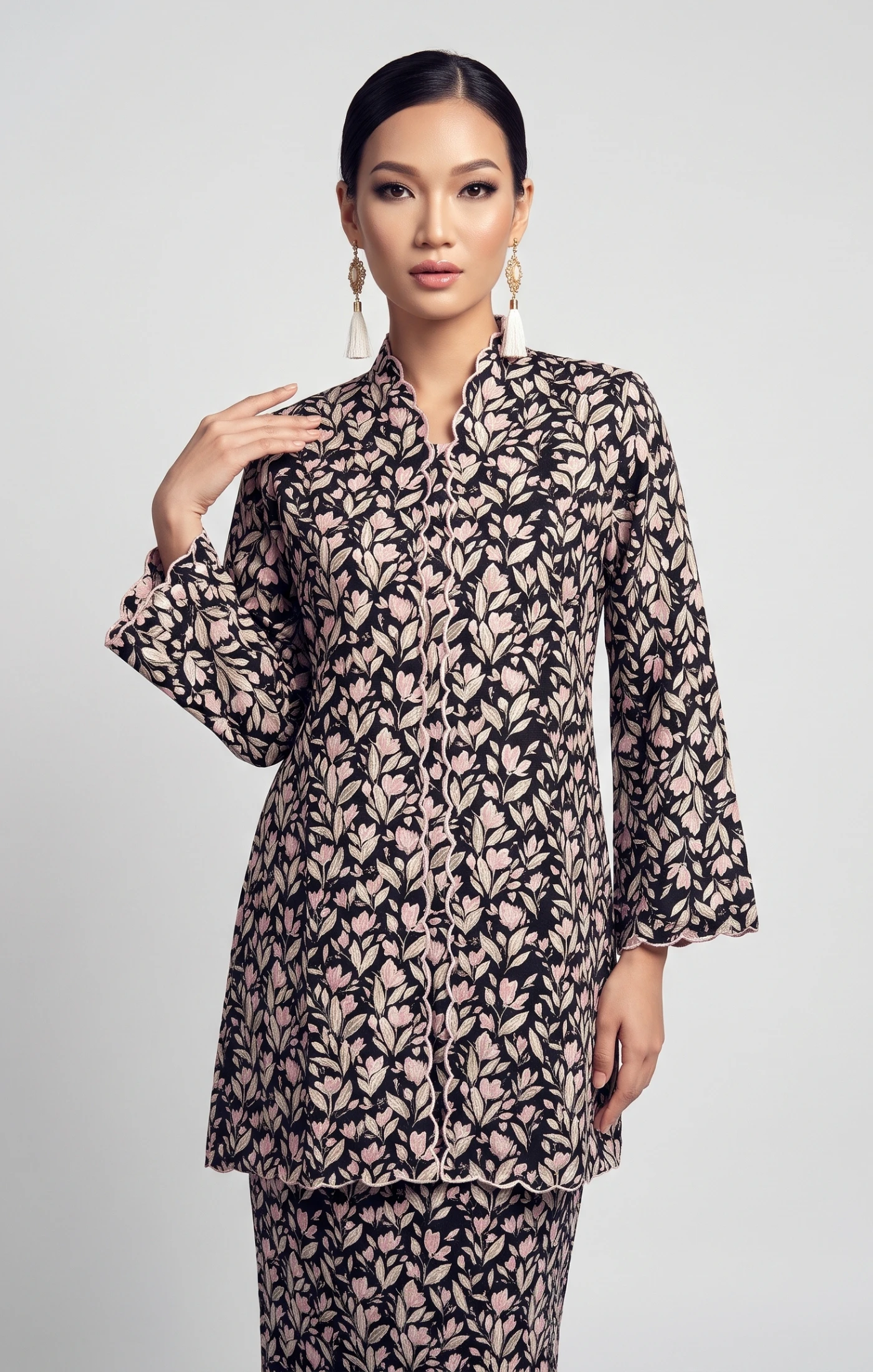
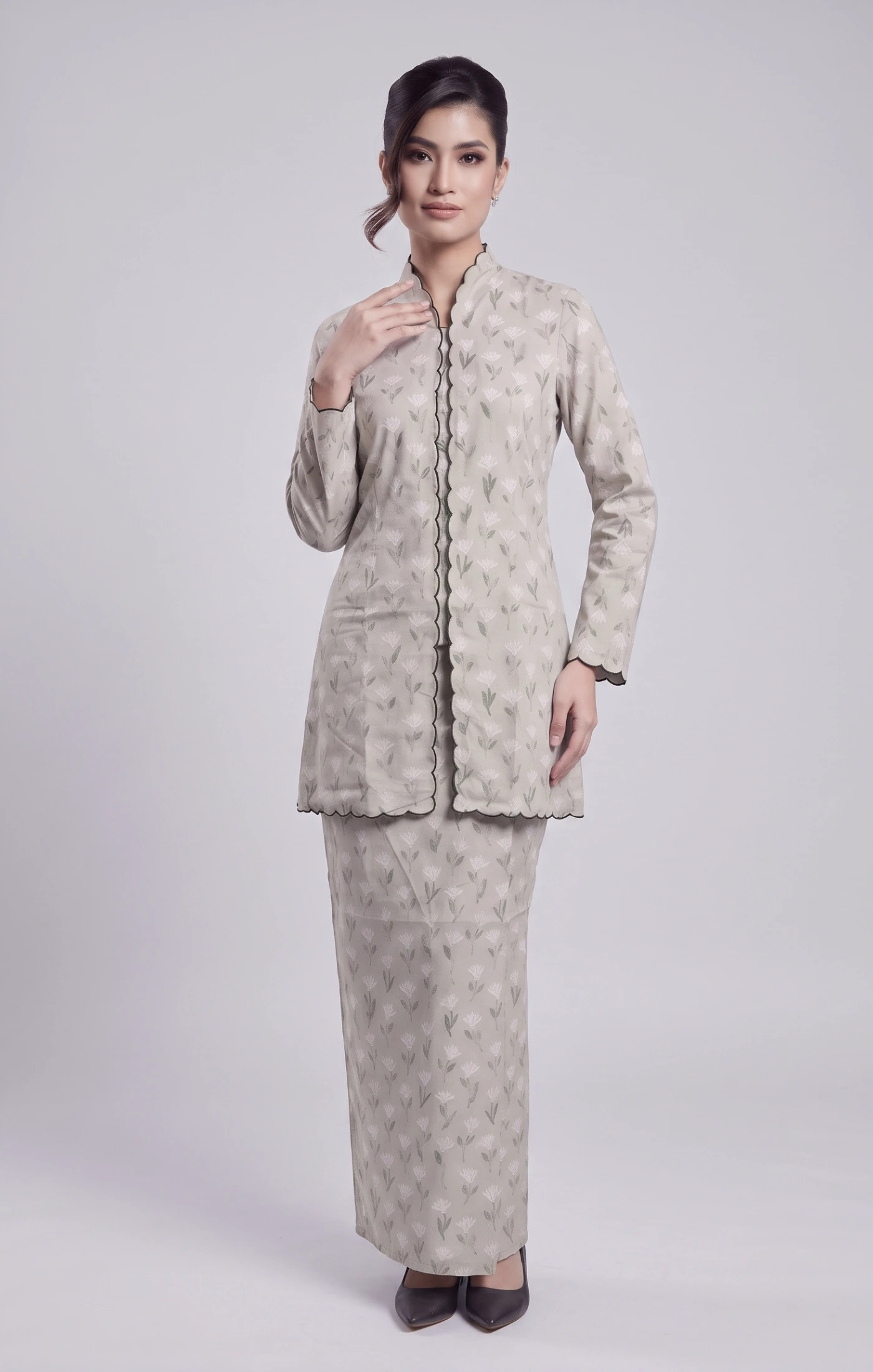
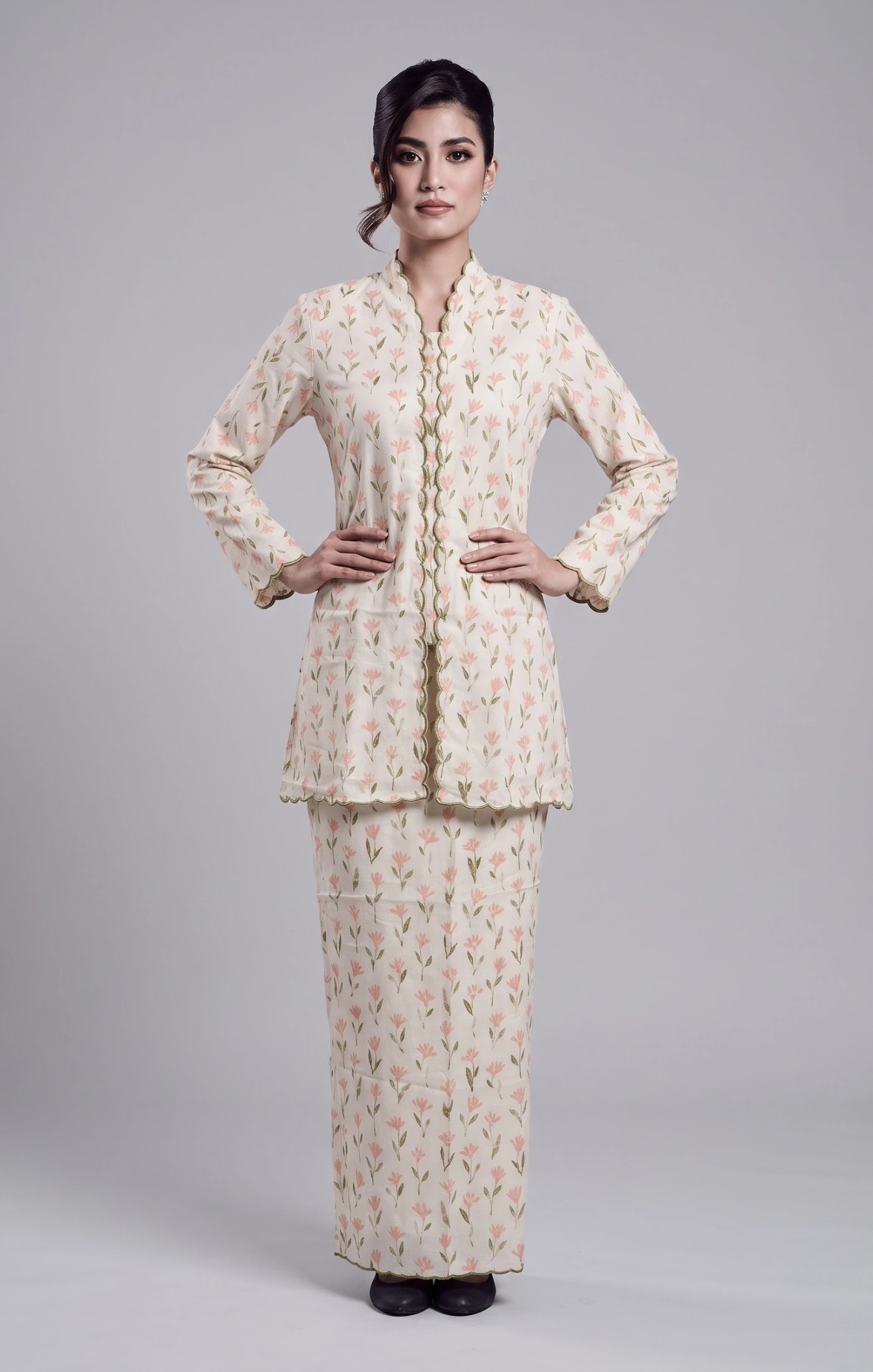
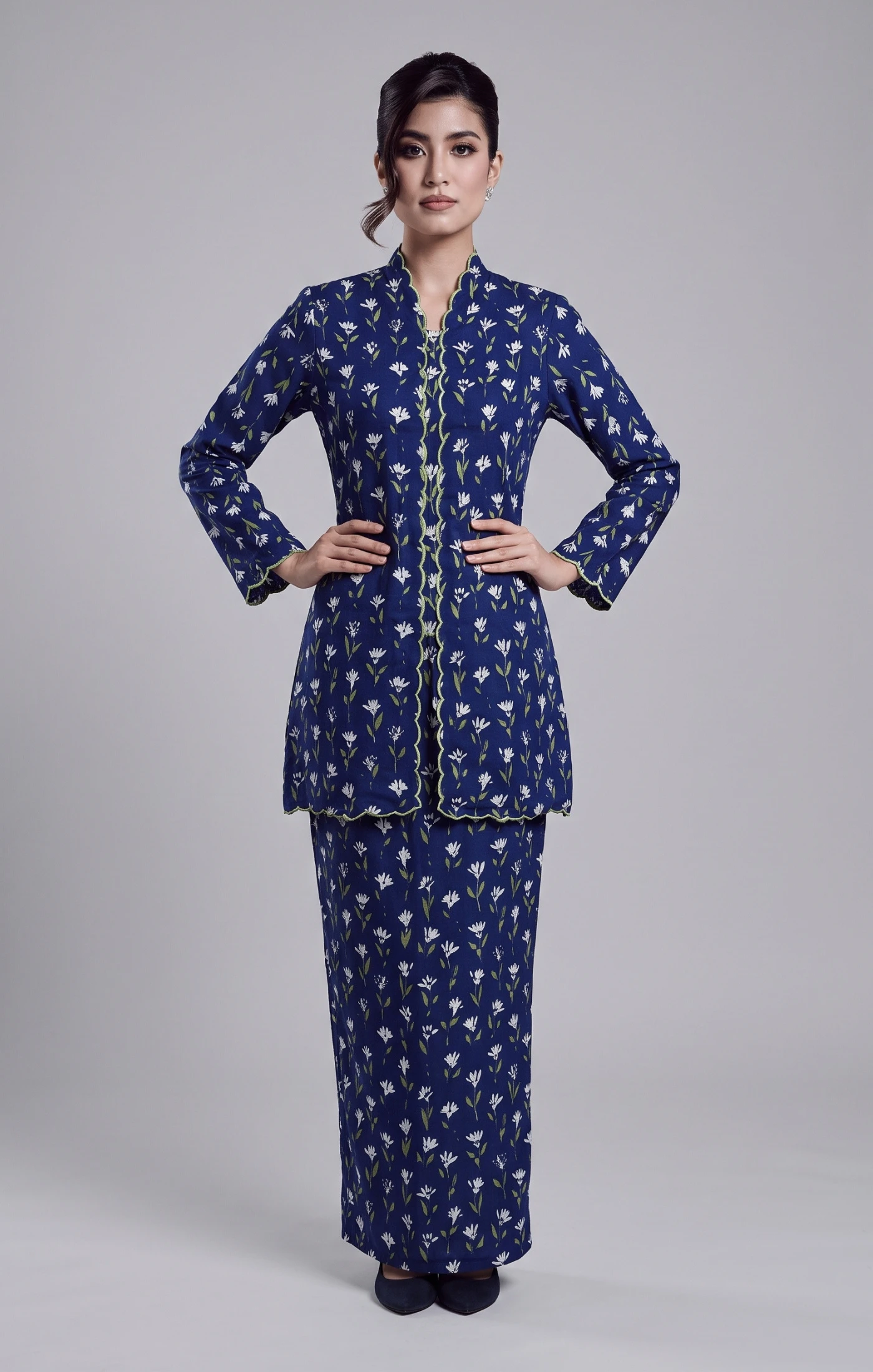
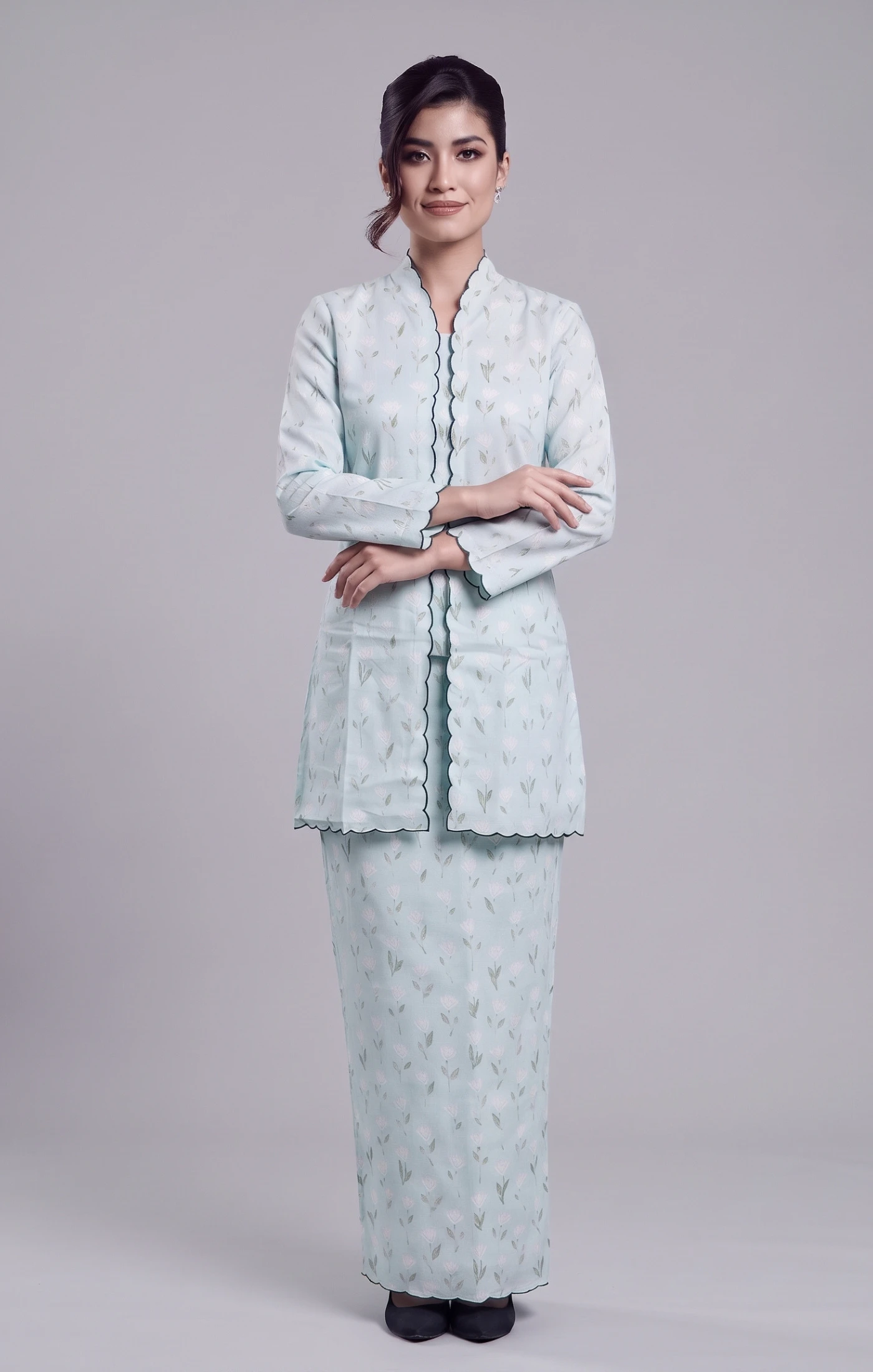
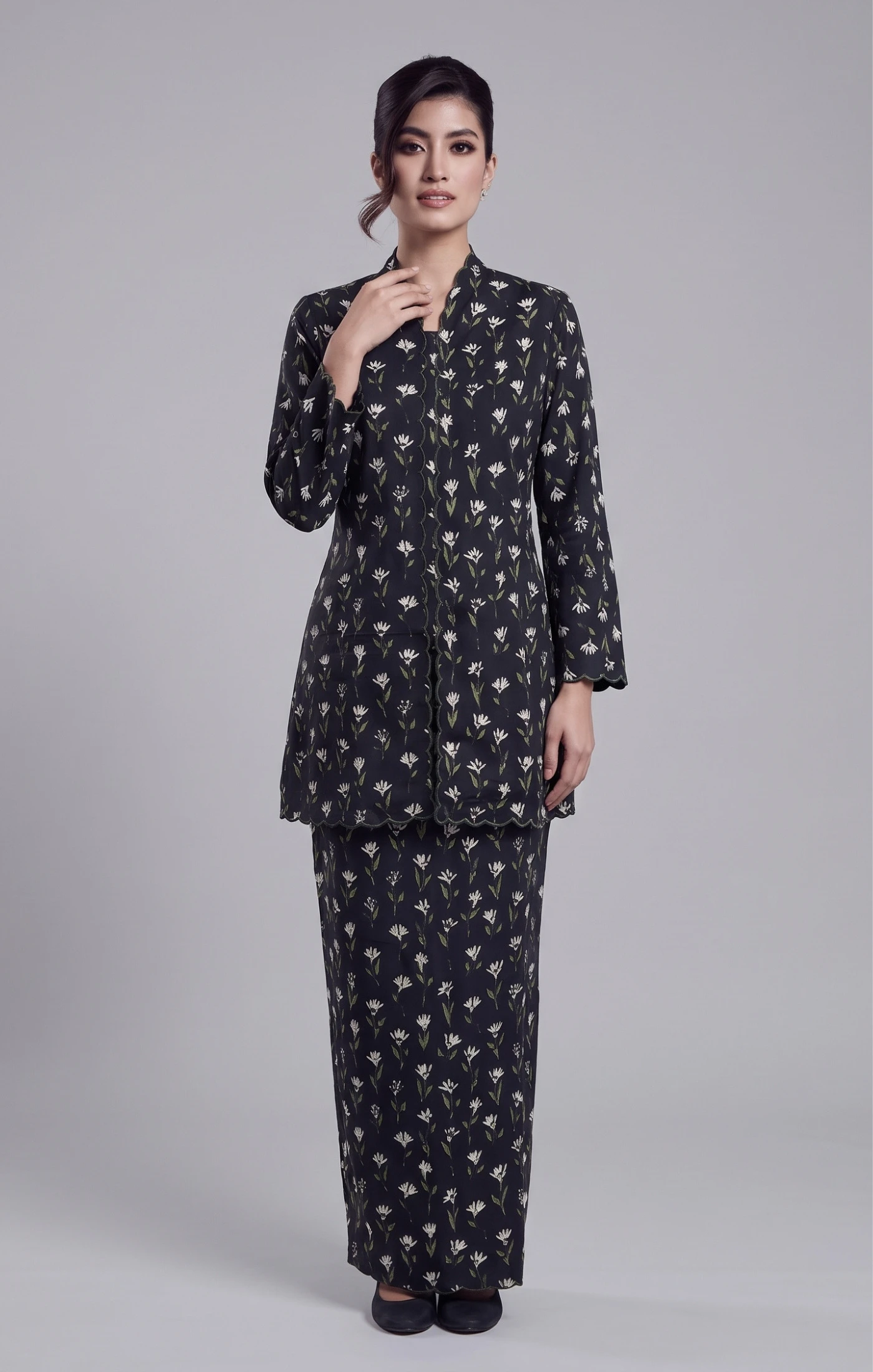
Our pieces carry tradition in the details rather than in costume. You’ll find songket bunga tabur and silver or gold thread on Seroja, deeper songket tones on Laylo, and long sleeves throughout, in sizes from XS to 2XL. The cut is modern and easy to move in, so you can wear it through a long day of salam, photos and makan without feeling restricted.
If you want to wear it the traditional way, the styling below brings the classic look back.
Wearing It the Traditional Way
The kerongsang. Pin a kerongsang ibu at the neckline, with two kerongsang anak beneath it, for the classic three-brooch look.
The kain. A kain batik sarung is the most traditional pairing. For weddings and Raya, a kain songket raises the formality.
The selendang. A light selendang draped over the shoulder or head completes the heritage look for adat ceremonies.
The colours. Deep tones like maroon, royal blue and emerald with gold thread feel ceremonial, while silver thread on darker shades suits evening events.
For Weddings, Adat and Raya
A baju kebaya tradisional is the natural choice for akad nikah, merisik, majlis adat and family portraits, where heritage matters as much as style. Mothers of the bride and groom often choose rich tones with gold thread, while sisters can coordinate in one shared colour.
Looking for a songket kebaya for the wedding itself? Explore our Baju Kebaya Songket collection, or browse every style in Baju Kebaya.
Shop Baju Kebaya Tradisional Online
Unsure about your size? WhatsApp us your measurements and our team will recommend one, or try the pieces on at our boutique in Shah Alam, Selangor → Visit our boutique. Pay by cash on delivery, card through DOKU, DuitNow QR or direct bank transfer. Shipping is RM7 in West Malaysia, free on orders over RM99, and RM15.90 to Sabah and Sarawak. Returns are accepted within 7 days.
Frequently Asked Questions
Three marks define it: an opening down the front, a pesak panel at the front, and a set of kerongsang ibu and anak to close it instead of buttons.
The original long Malay kebaya, falling below the knee and worn with a kain batik sarung. Shorter versions came later.
A three-piece kerongsang set, a kain batik or kain songket, and a light selendang for formal or adat occasions.
The Malay kebaya is modest and long-sleeved, often in songket or brocade. The Nyonya kebaya is a shorter, fitted Peranakan blouse in sheer fabric with embroidered edges.
Yes. It’s a classic choice for akad nikah, merisik and adat ceremonies, especially for the mothers and families of the couple.
Yes. Shipping to Sabah and Sarawak is RM15.90, and orders over RM99 ship free within West Malaysia.
Curated for you
You may also like
Stay in the loop
Get first dibs on new Baju Kebaya Tradisional drops.
Subscribers see new arrivals 48 hours before everyone else, plus the occasional stylist note on how to wear the latest pieces. No spam, ever.